





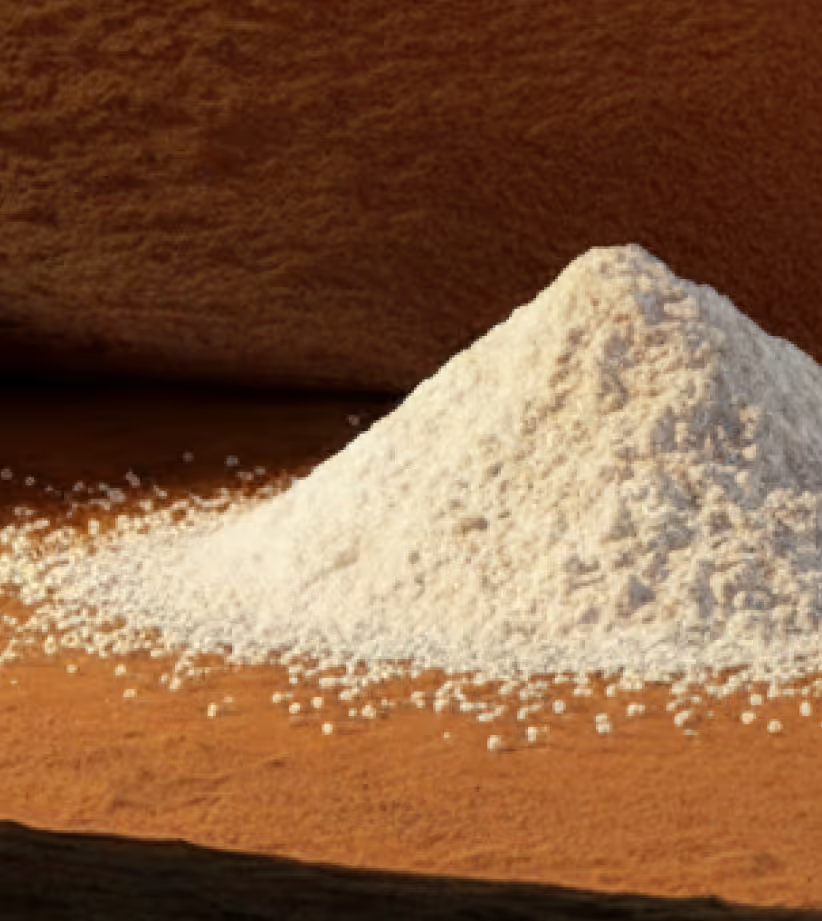






In agricultural applications, soil acidity is a primary constraint on nutrient availability and crop productivity. Limestone neutralises excess acidity, restores pH to the range required for nutrient uptake, and improves fertilizer effectiveness. Agricultural limestone quality is determined by CaCO3 content, particle fineness, and secondary mineral composition. Consistent input quality produces predictable soil response across application cycles and soil types.
Current applications supported by our lime products
Soil Liming & pH Correction
Application context
Process impact
Common requirements
- Corrects soil pH to the required range
- Improves macro and micro-nutrient availability
- Supports soil microbial activity
- Supports root development and soil structure
- Reduces yield variability across seasons
Applicable products
Calcium & Magnesium Nutrient Supply
Application context
Process impact
Common requirements
- Supports balanced crop nutrition
- Supports plant strength and stress tolerance
- Supports nutrient mobility within the plant
- Reduces the risk of deficiency-driven yield loss
- Supports consistent crop development
Applicable products
Fertilizer Neutralisation & Granulation
Application context
Process impact
Common requirements
- Supports durable, consistent granule formation
- Neutralises process acidity reliably
- Improves flowability for field application
- Supports uniform nutrient distribution
- Improves storage stability and shelf life
Applicable products
Qualification and technical support
Materials are produced under defined process parameters and supported by technical documentation for evaluation and qualification.
Defined material specifications

Controlled processing parameters

Batch traceability

Technical evaluation support


FAQs
If you have questions about lime products, specifications, or typical applications, the answers below address some of the most common topics. For anything more specific, our technical team is happy to help.

How does high-purity limestone correct soil acidity affecting crop productivity?
Limestone neutralises soil acidity and restores pH to the range required for nutrient uptake. This is particularly relevant in soils subject to repeated flood irrigation, where acidification accelerates over time.
What role does calcium play in agricultural-grade lime products?
Calcium supports cell wall development and root structure. Consistent calcium availability across the growth cycle reduces yield variability and improves crop uniformity at harvest.
How does limestone affect the performance of agricultural fertilizers?
Limestone acts as a stabilising component in acidic fertilizer formulations, improving granule integrity and shelf stability while supporting more consistent nutrient release and field application.