

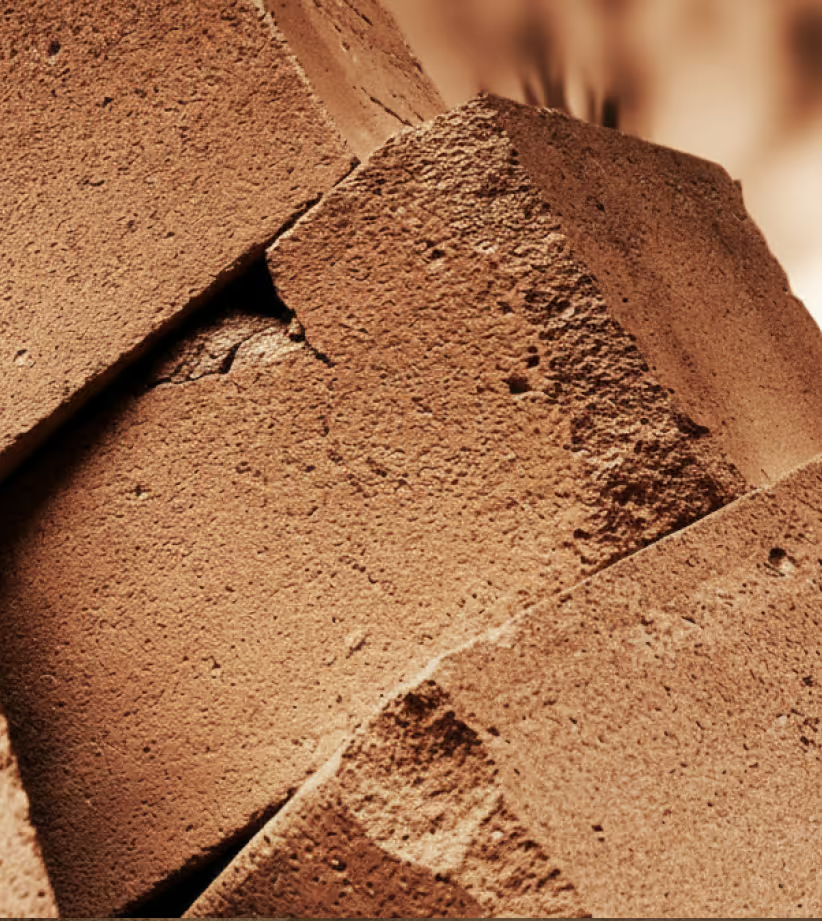
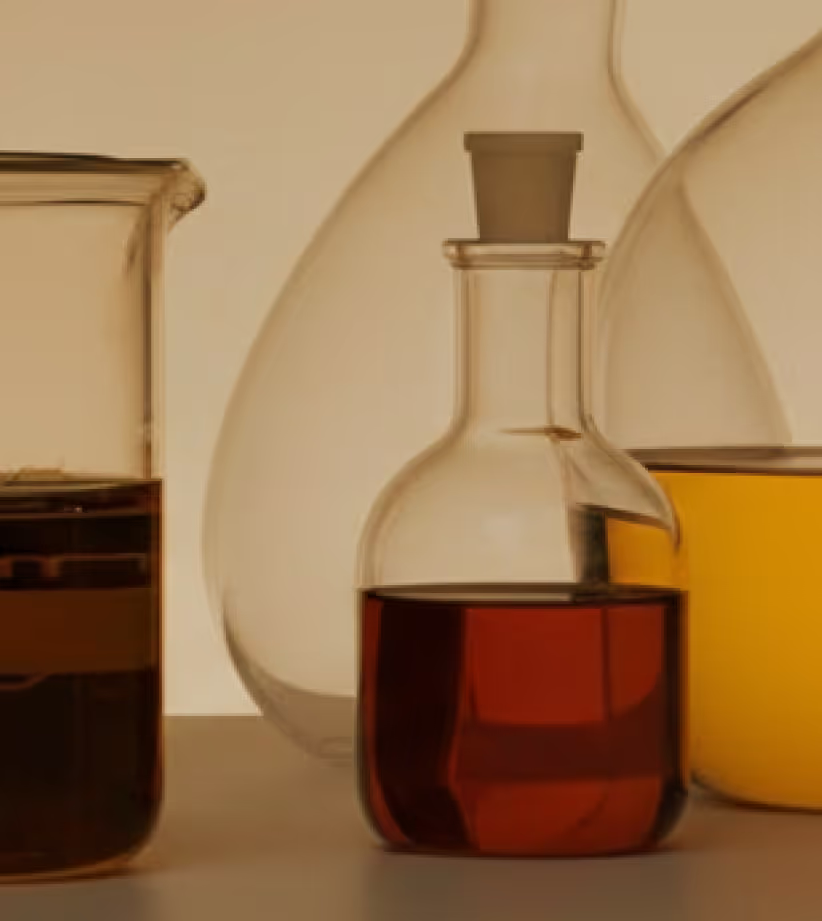

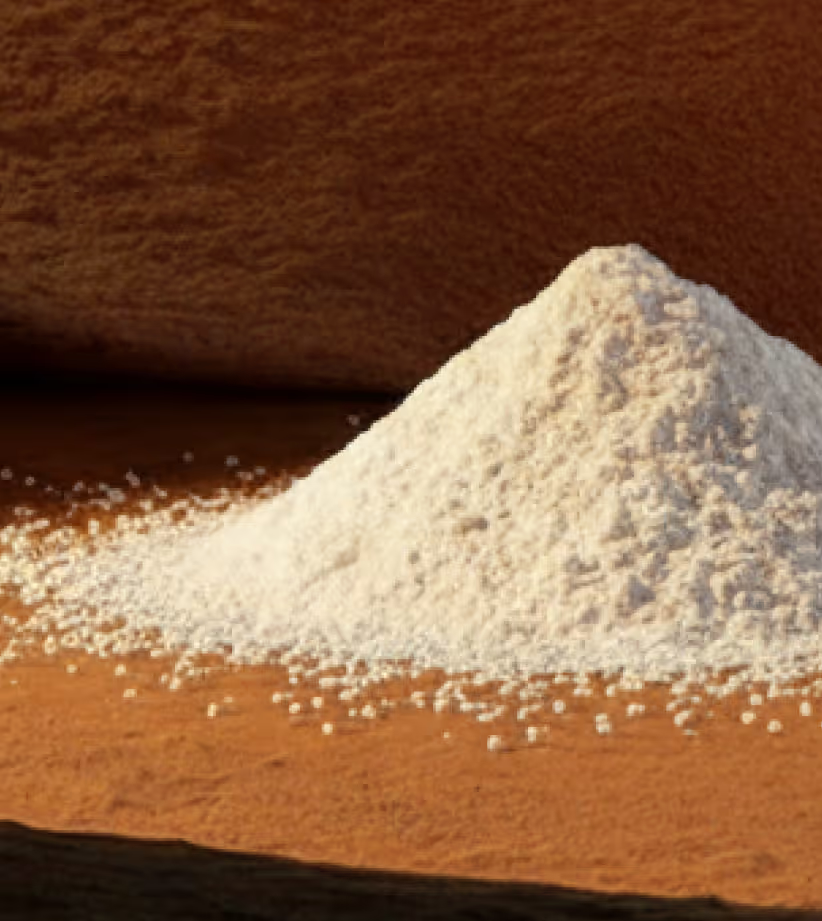



In chemical manufacturing and industrial processing, limestone quality is a direct process variable. Calcium purity governs conversion efficiency, reaction behaviour, and product consistency across calcination, precipitation, and synthesis operations. Impurities in feed material introduce variability at every stage. Consistent chemical composition and defined particle sizing allow stable, repeatable process outcomes.
Current applications supported by our lime products
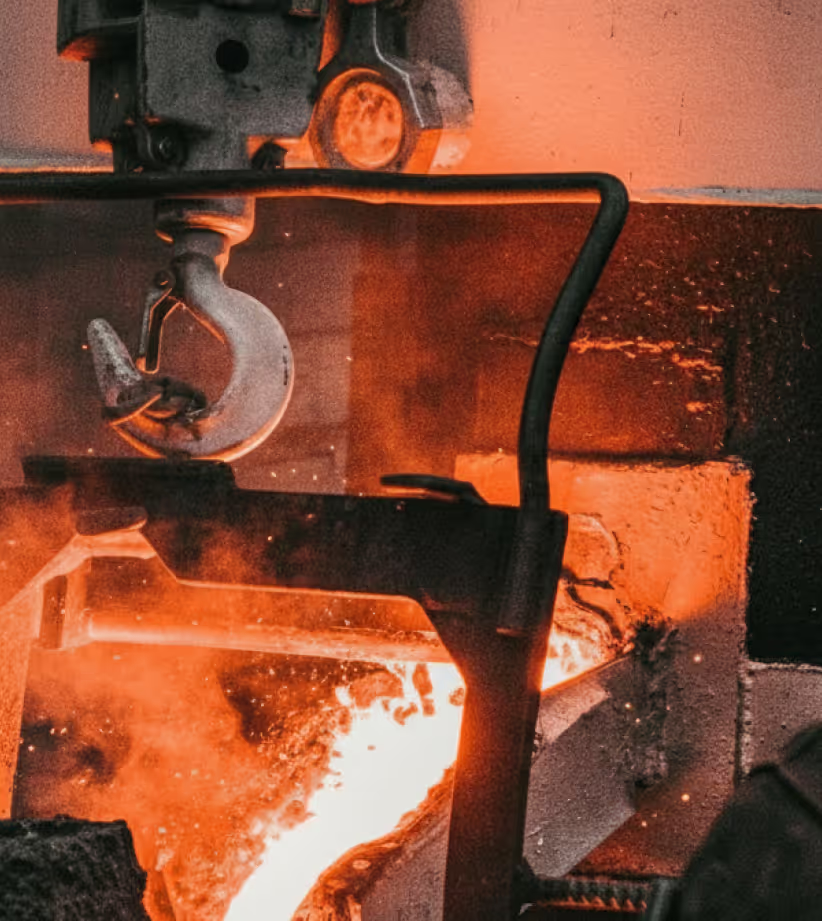
High-Reactivity Calcination Feed
Application context
Process impact
Common requirements
- Consistent CaO availability
- High-grade reaction kinetics
- Reduced residue and fouling
- Reproducible high-grade lime output
Applicable products
Precipitation & Hydration Feed (Hydrated Lime & PCC)
Application context
Process impact
Common requirements
- Controlled hydration performance
- Stable continuous slurry rheology
- Precise PCC morphology control
- Enhanced separation efficiency
Applicable products
Chemical Synthesis Feed
Application context
Process impact
Common requirements
- Consistent batch and continuous reactions
- Zero critical product contamination
- Upheld industrial purity grades
- Reduced off-spec output
Applicable products
Qualification and technical support
Materials are produced under defined process parameters and supported by technical documentation for evaluation and qualification.
Defined material specifications

Controlled processing parameters

Batch traceability

Technical evaluation support


FAQs
If you have questions about lime products, specifications, or typical applications, the answers below address some of the most common topics. For anything more specific, our technical team is happy to help.

Why is high-purity limestone essential for lime manufacturing?
High-purity limestone ensures efficient calcination, consistent lime reactivity, and stable kiln operations. It is the input variable that most directly determines chemical-grade output quality.
How does limestone quality affect quicklime, hydrated lime, and PCC production?
Consistent purity supports efficient quicklime conversion, precise hydrated lime formation, and accurate PCC crystallisation. Variability in feed quality introduces inconsistency across all three processes.
What role does high-grade limestone play in industrial chemical synthesis?
High-grade limestone serves as a controlled input for neutralisation, precipitation, and pH management. Defined composition enables stable, repeatable reaction outcomes across large-scale chemical manufacturing.
Why is chemical-grade limestone preferred for specialty chemical production?
Consistent composition and minimal impurities allow precise reaction control and protect product integrity. This supports compliance with international chemical-grade specifications across specialty applications.