

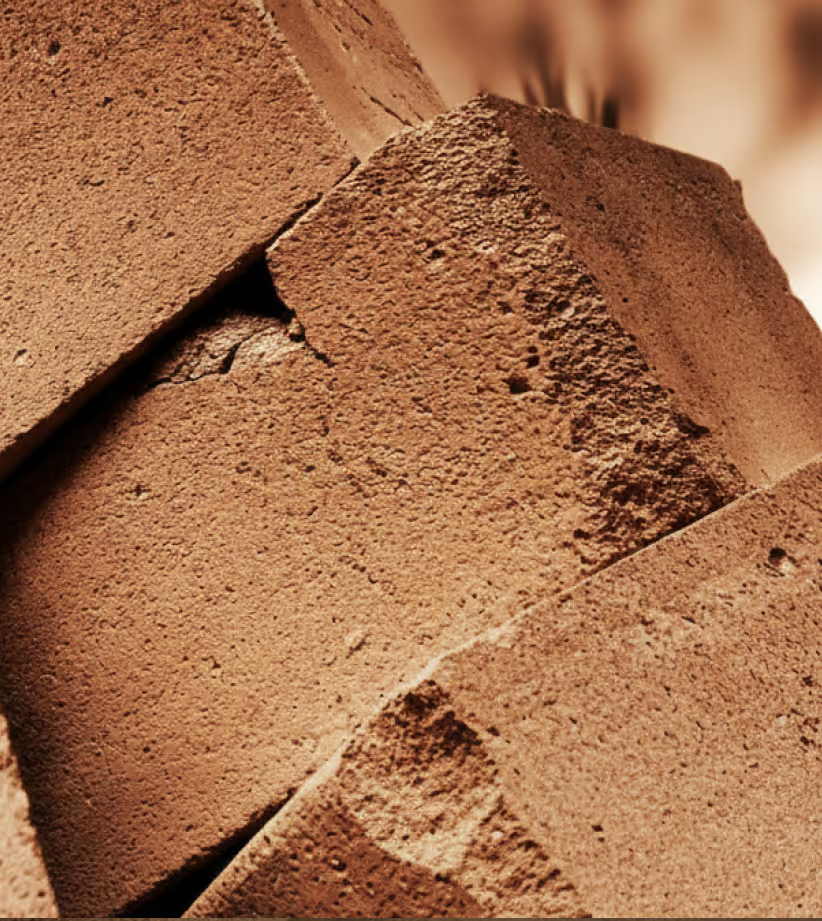
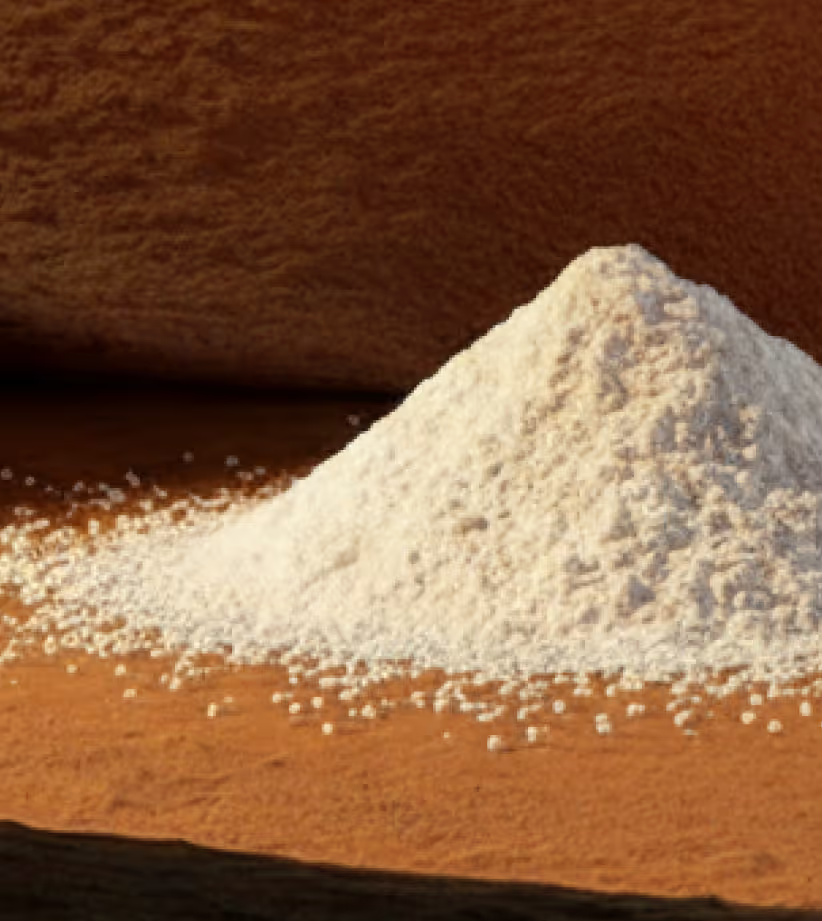


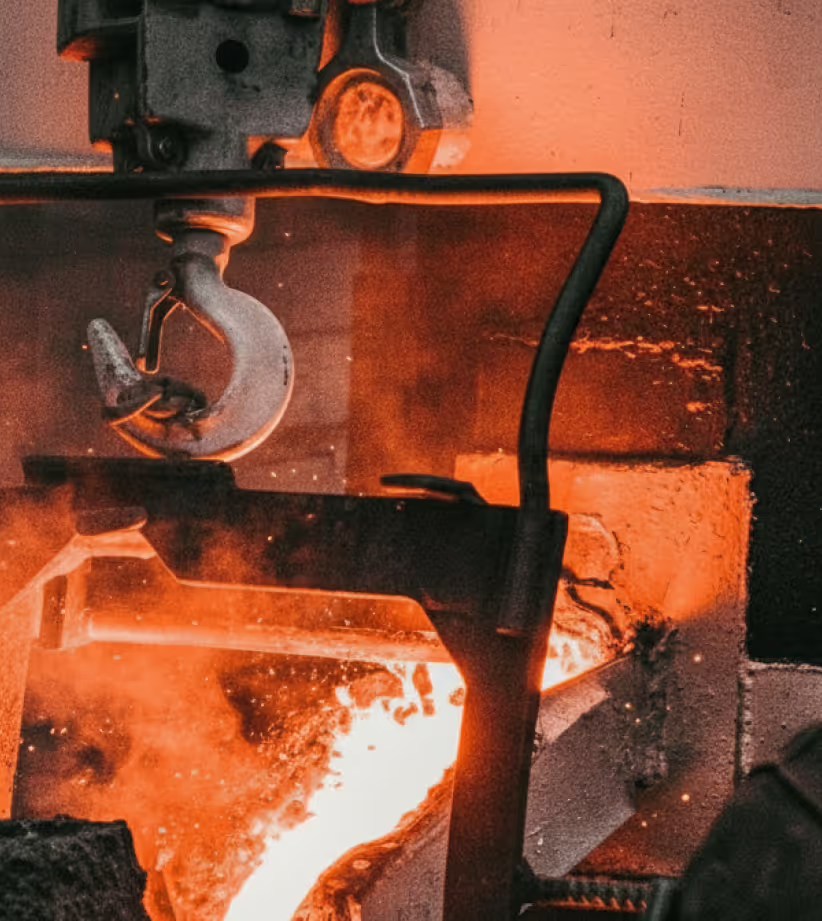



In glass manufacturing, calcium oxide stabilises the silica network and governs melt behaviour across the full production process. Limestone quality determines mechanical durability, chemical resistance, and optical performance. For solar applications, iron content in feed limestone is a critical variable. Fe2O3 trace levels degrade light transmittance and disqualify glass from photovoltaic standards. Consistent PSD and composition maintain melt uniformity and furnace stability.
Current applications supported by our lime products
Batch Composition Stabilisation
Application context
Process impact
Common requirements
- Improved thermal melt efficiency
- Reduced melt defects
- Consistent optical quality
- Stable forming behaviour
Applicable products
Network Stabilisation
Application context
Process impact
Common requirements
- Higher mechanical glass strength
- Enhanced chemical attack resistance
- Thin glass format support
- Reduced breakage losses
- Consistent cross-grade performance
Applicable products
Melt Viscosity Control
Application context
Process impact
Common requirements
- Controlled melt flow behaviour
- Reduced furnace thermal variation
- High-rate forming consistency
- Predictable furnace operation
Applicable products
Qualification and technical support
Materials are produced under defined process parameters and supported by technical documentation for evaluation and qualification.
Defined material specifications

Controlled processing parameters

Batch traceability

Technical evaluation support


FAQs
If you have questions about lime products, specifications, or typical applications, the answers below address some of the most common topics. For anything more specific, our technical team is happy to help.

Why is low-iron limestone required for solar glass production?
Iron oxide degrades light transmittance and introduces colour that disqualifies glass from photovoltaic specifications. Ultra-low Fe2O3 content is an entry requirement for solar-grade supply, not a preference.
How does limestone determine glass durability?
Calcium from high-purity limestone stabilises the silica network, improving mechanical strength and resistance to thermal cycling, UV exposure, and atmospheric degradation. Feed purity directly determines service life.
Does particle size distribution affect furnace performance?
Inconsistent PSD causes segregation, uneven melt rates, and furnace instability, which translate into surface defects, downtime, and energy inefficiency. Controlled PSD is a production requirement for high-throughput operations.