





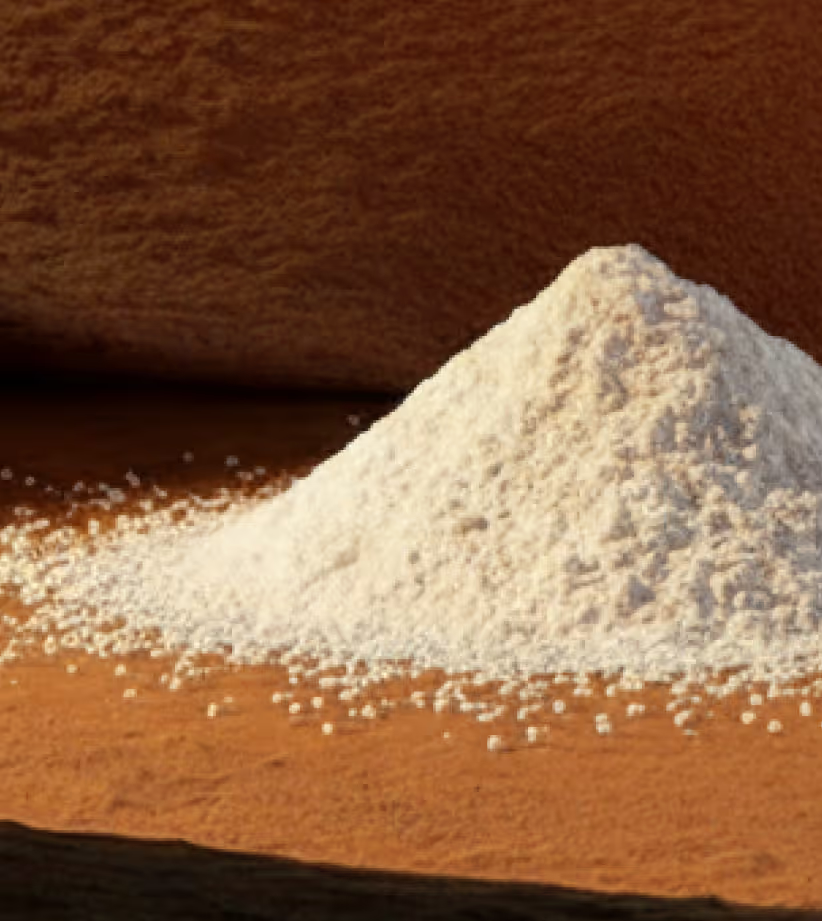




What it is
An ultra-high purity limestone with industry-leading iron control — formulated for defect-sensitive solar and optical glass lines where iron content is the decisive variable in light transmission performance and glass clarity.
What it does
- Enables maximum solar light transmittance through ultra-low Fe₂O₃ input
- Eliminates iron-driven colour distortion and optical degradation
- Controls impurity carryover into the melt for defect-free output
- Stabilises batch chemistry for precision optical-grade melt formation
- Supports thin glass format production with consistent network integrity
Where it’s typically used
Solar panel glass lines, ultra-clear glass production, and optical-grade manufacturing where Fe₂O₃ below 300 ppm is a non-negotiable input specification.
Quality options
- CaO ≥ 54%
- Fe₂O₃ ≤ 0.03%
- MgO ≤ 0.8%
- SiO₂ ≤ 0.1%
Size
- 0.1 mm – 2.0 mm
- Narrow distribution
- Controlled fines
- Custom PSD available
Applications
- Ultra-low iron CaO input for solar glass batch chemistry
- Optical-grade melt control for high-transmittance glass lines
- Silica network stabilisation in thin and specialty glass formats
- Precision PSD feed for defect-sensitive, continuous production lines
FAQs
If you have questions about limestone products, specifications, or typical applications, the answers below address some of the most common topics. For anything more specific, our technical team is happy to help.

How does Solaris Pure maximise solar panel light transmittance?
Fe₂O₃ ≤ 300 ppm — among the lowest in the industry — directly reduces iron-induced tinting, preserving the optical clarity that solar efficiency depends on.
Why is Solaris Pure the benchmark input for defect-sensitive glass lines?
Narrow PSD with controlled fines minimises impurity carryover, protecting defect-sensitive optical-grade melt chemistry at every production stage.
What commercial advantage does Solaris Pure deliver to solar glass manufacturers?
Consistent ultra-high purity — CaO ≥ 54%, SiO₂ ≤ 0.1% — means fewer quality rejections, tighter yield control, and stronger output economics.