

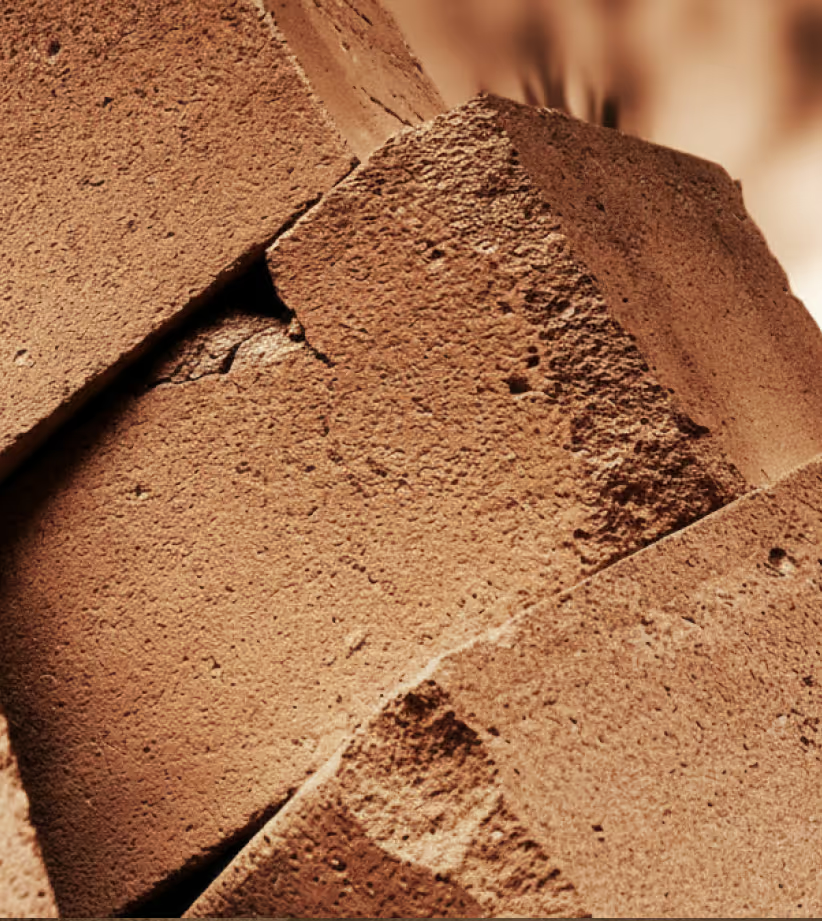



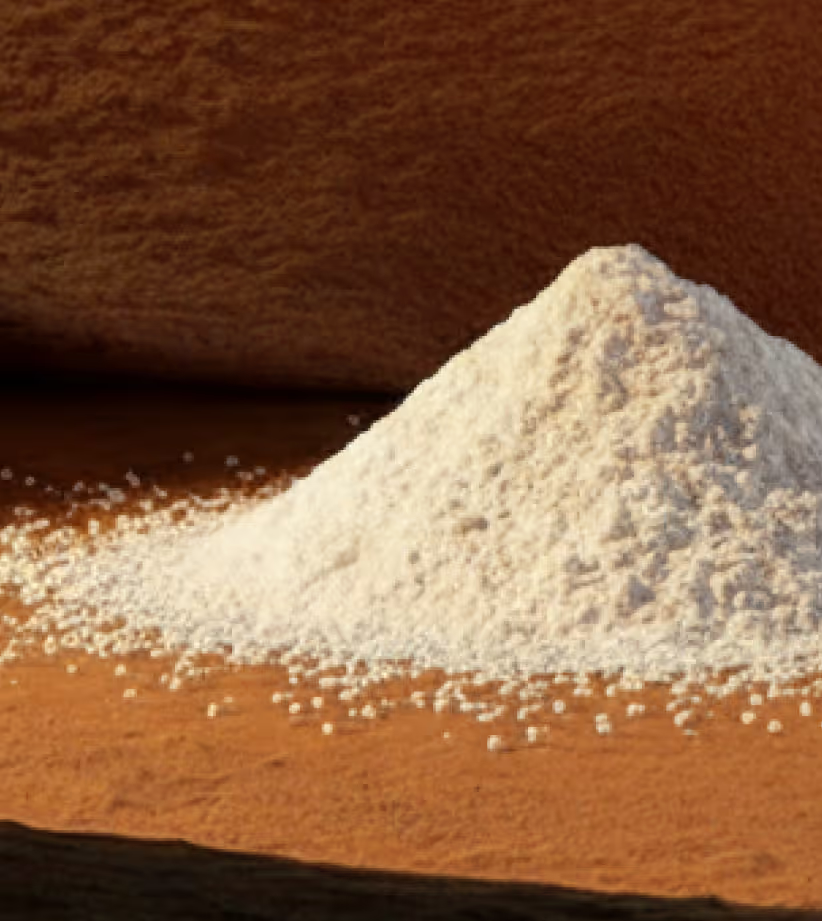


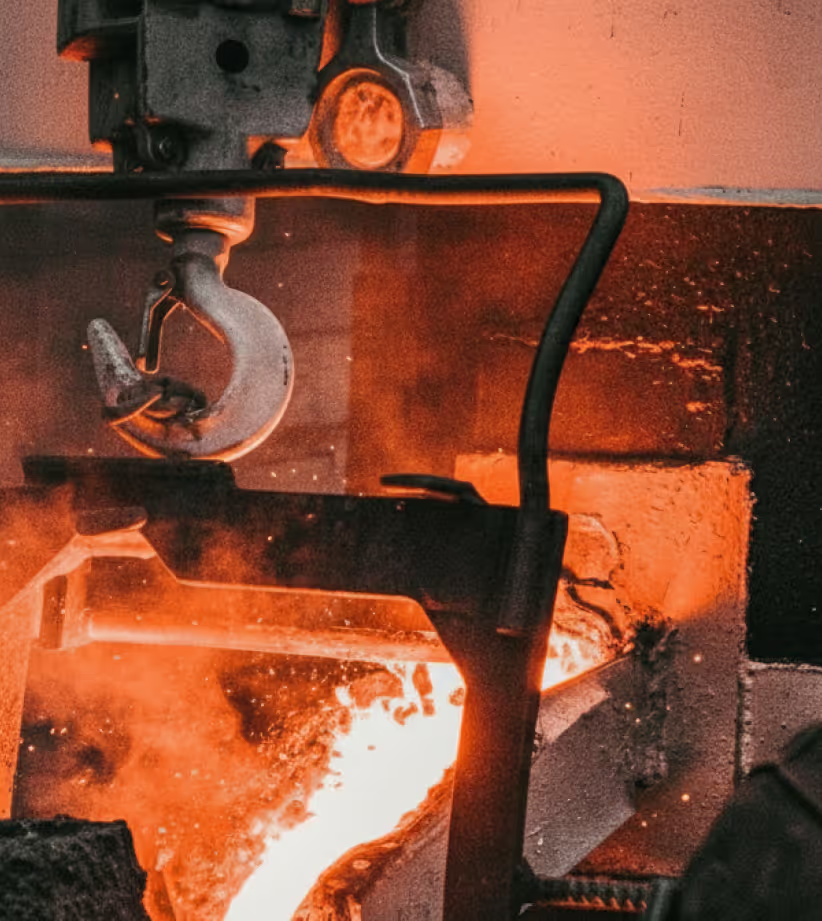

In cement production, limestone is the primary raw material governing raw mix chemistry and clinker formation. Calcium carbonate purity determines the Lime Saturation Factor, controlling burnability, kiln stability, and the mechanical performance of finished cement. Consistent feed quality reduces raw mix correction and supports stable kiln operations. In construction, engineered limestone gradations serve as fillers where defined particle sizing is required.
Current applications supported by our lime products
LSF Correction & Raw Mix Optimisation
Application context
Process impact
Common requirements
- Stabilises clinker phase balance
- Maximises kiln throughput & efficiency
- Reduces free lime variability
- Ensures consistent strength development
- Supports long-run kiln operation
Applicable products
Deposit Sweetening & Blending
Application context
Process impact
Common requirements
- Maximises variable deposit utilisation
- Enhances blending flexibility
- Reduces corrective additive consumption
- Maintains stable kiln chemistry
- Supports long-term operational predictability
Applicable products
Performance Enhancement (LC3 & Blended Cement)
Application context
Process impact
Common requirements
- Reduces clinker factor without strength loss
- Optimises particle packing efficiency
- Enhances early compressive strength
- Supports LC3 & low-carbon formulations
- Improves grinding efficiency
Applicable products
Qualification and technical support
Materials are produced under defined process parameters and supported by technical documentation for evaluation and qualification.
Defined material specifications

Controlled processing parameters

Batch traceability

Technical evaluation support


FAQs
If you have questions about lime products, specifications, or typical applications, the answers below address some of the most common topics. For anything more specific, our technical team is happy to help.

Why is high-calcium limestone critical to cement raw mix design?
Calcium carbonate purity governs the Lime Saturation Factor, which controls clinker mineralogy, kiln stability, and final cement performance. Consistent composition is a process requirement, not a procurement preference.
Can limestone correct chemically variable raw material deposits?
High-purity limestone acts as a chemical corrective, restoring LSF and silica modulus where quarry feeds are inconsistent. This reduces dependency on synthetic additives and extends the productive use of variable deposits.
How is consistency maintained across shipments?
Through selective extraction, systematic geological mapping, and pre-shipment chemical analysis reporting CaCO3, MgO, SiO2, and moisture content. Plant teams receive material matched to their process design specifications.
Can controlled-PSD limestone replace conventional fillers in construction mixes?
In most applications, yes. Its defined particle size profile and chemical neutrality allow direct substitution, reducing procurement complexity while improving mix uniformity and site handling characteristics.