
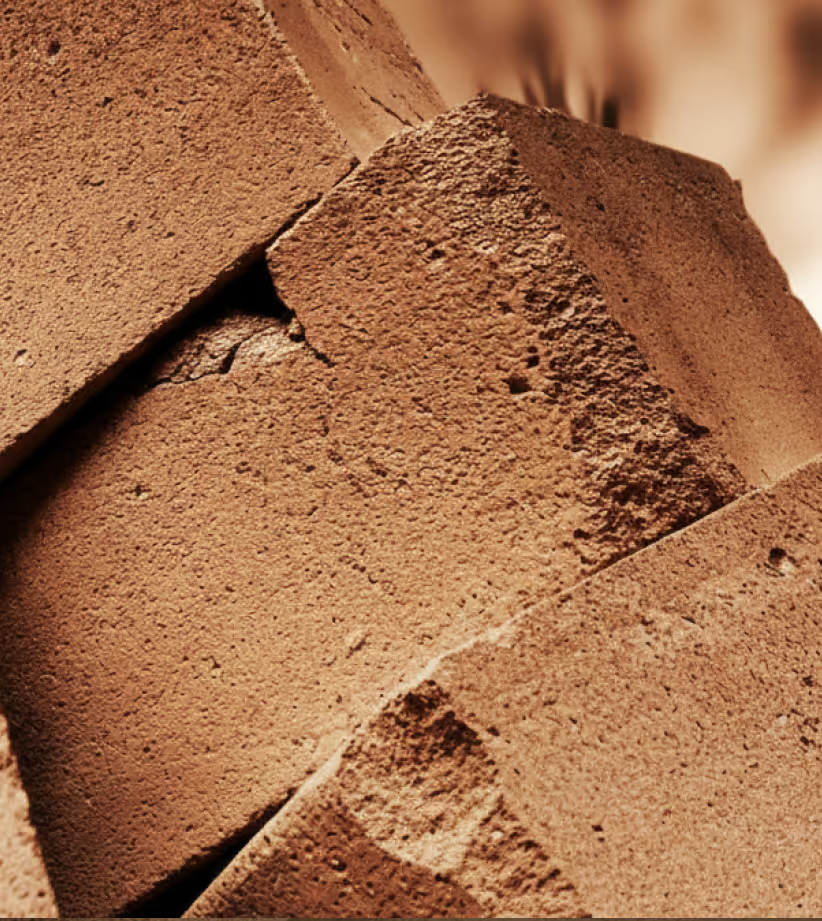



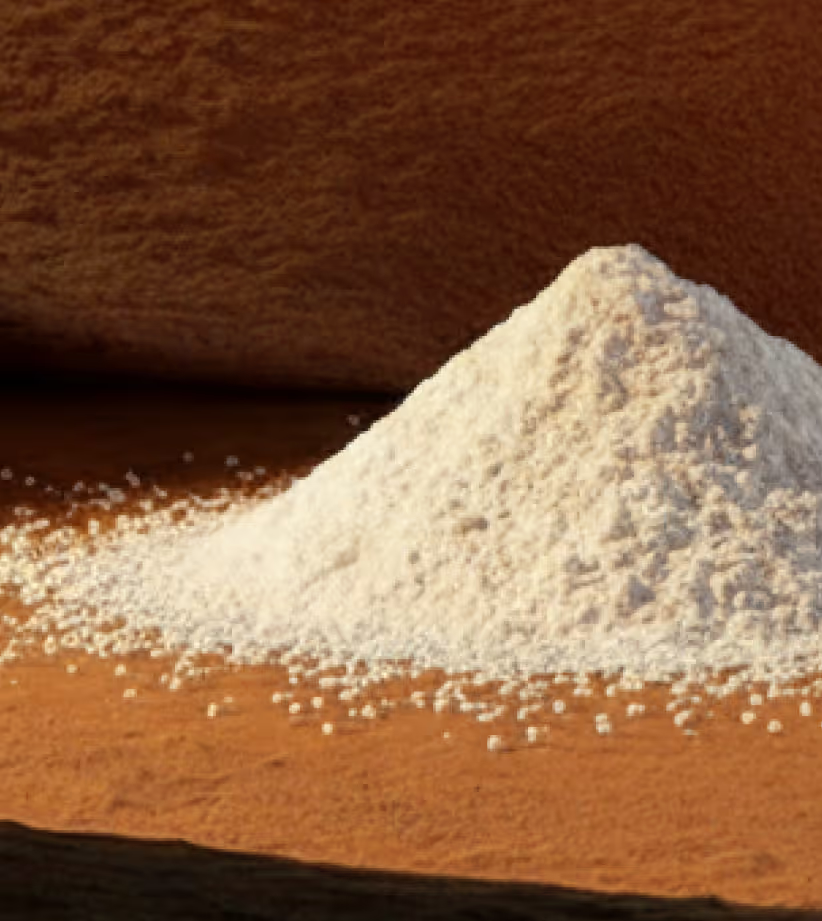
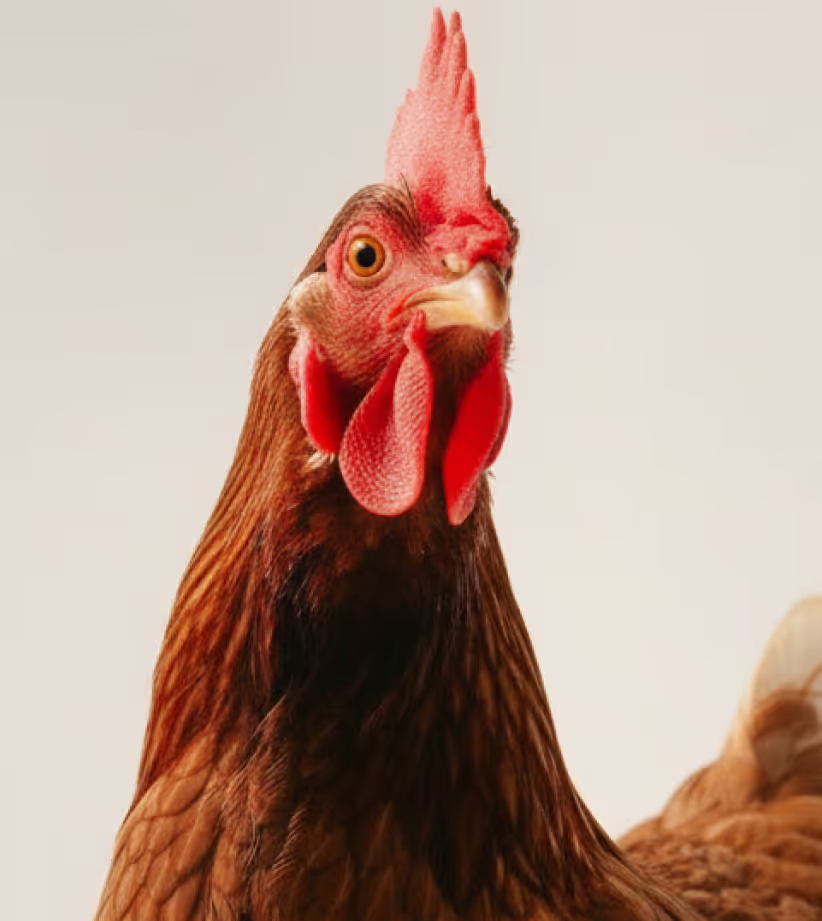




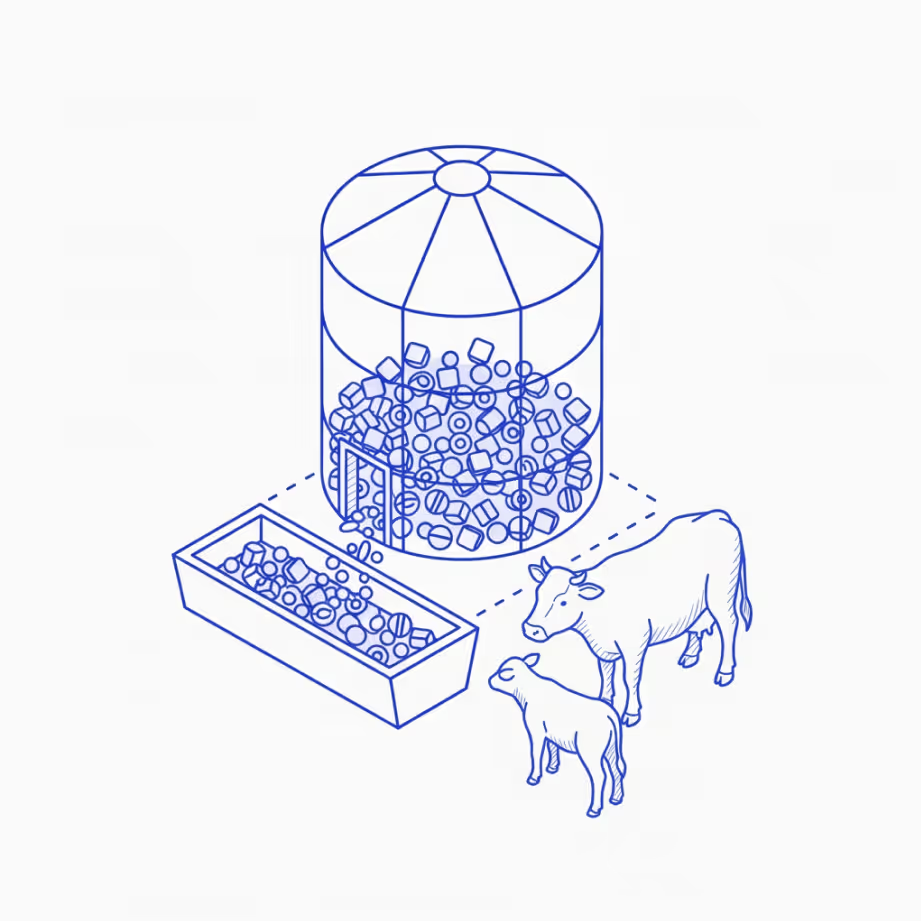
In poultry and livestock production, calcium availability governs eggshell integrity, skeletal development, and metabolic function. Limestone is the primary calcium source in compound feed, and performance is determined by chemical purity and particle gradation. Coarser fractions sustain overnight calcium supply in laying hens, while finer fractions support rapid absorption. Consistent input quality reduces variability in nutrient delivery across production cycles.
Current applications supported by our lime products
Feed Calcium Supplementation
Application context
Process impact
Common requirements
- Strengthens bone development
- Improves eggshell quality & hatchability
- Ensures formulation consistency
- Supports high-throughput feed lines
Applicable products
Gizzard Function & Digestive Grit
Application context
Process impact
Common requirements
- Enhances gizzard function & nutrient extraction
- Improves feed conversion ratios
- Sustains overnight calcium supply for layers
- Supports digestive tract health
Applicable products
Direct Feed Blending & Premix Use
Application context
Process impact
Common requirements
- Enables precise micro-dosing
- Improves blend uniformity
- Supports starter & grower nutrition
- Reduces segregation in pellet & mash systems
Applicable products
Qualification and technical support
Materials are produced under defined process parameters and supported by technical documentation for evaluation and qualification.
Defined material specifications

Controlled processing parameters

Batch traceability

Technical evaluation support


FAQs
If you have questions about lime products, specifications, or typical applications, the answers below address some of the most common topics. For anything more specific, our technical team is happy to help.

Why is limestone the preferred calcium source in poultry and animal nutrition?
Limestone delivers consistent, bioavailable calcium that supports eggshell integrity, skeletal strength, and metabolic function. It is the standard mineral input across commercial poultry and livestock operations.
How does particle size gradation influence calcium utilisation in feed?
Controlled particle gradation governs release kinetics. Coarser fractions sustain overnight calcium supply for laying hens, while finer particles support rapid absorption and uniform distribution in compound feed.
How does limestone quality affect feed performance and flock productivity?
Consistent CaCO3 purity, low impurity levels, and controlled sizing support predictable nutrient delivery, stable digestion efficiency, and repeatable flock performance across production cycles.