




GCC vs PCC: Ground and Precipitated Calcium Carbonate Explained
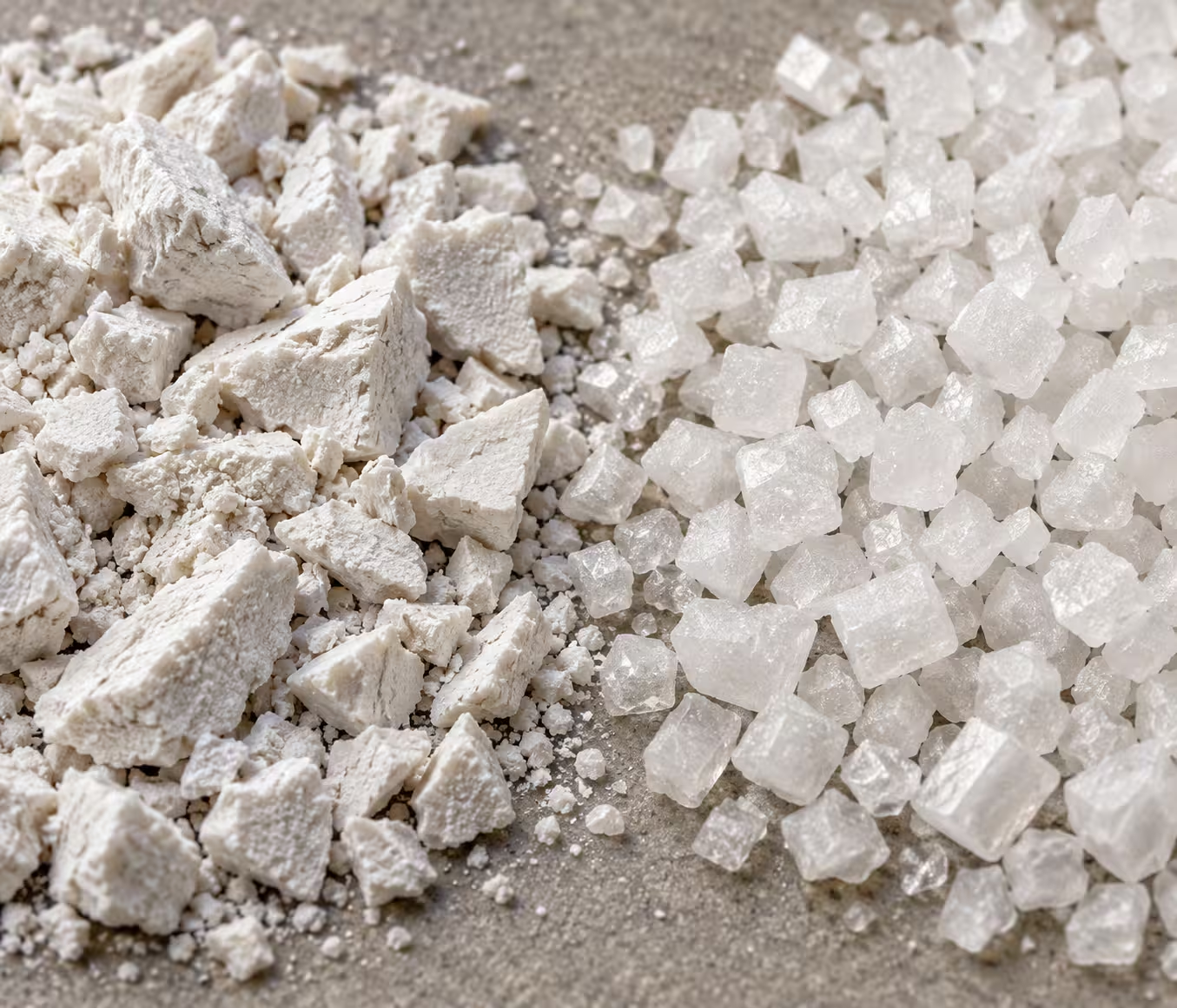

GCC and PCC are both calcium carbonate. GCC is ground from natural rock and keeps that rock's purity and character, while PCC is precipitated in a reactor from milk of lime and carbon dioxide, giving finer, more uniform, shaped particles. Judge them by particle size, distribution, shape and the standard your product must meet, not by the name on the bag.
A paint plant's raw material list says calcium carbonate. So does a paper mill's, a cosmetics maker's and a PVC pipe extruder's. They are rarely buying the same powder.
Indian trade adds more names: heavy and light, whiting, calcite powder, activated. Same formula on the bag. Different particle in the process.
Ground calcium carbonate (GCC) and precipitated calcium carbonate (PCC) are the same compound, CaCO3, made in two different ways. GCC is natural rock, such as limestone, marble or chalk, crushed and ground to size. PCC is made chemically: quicklime is slaked to milk of lime, then reacted with carbon dioxide. That gives finer, more uniform particles.
This note covers how each is made, how they differ, which Indian standards apply and how to choose.
Same chemistry, different names
GCC and PCC differ only in how the particle was made, which sets its size, shape and purity. Read the table below as a translator for spec sheets and quotes.
| Name you may see | What it usually means in Indian trade | GCC or PCC |
|---|---|---|
| Heavy calcium carbonate | Usually ground calcium carbonate | GCC |
| Whiting | Natural ground calcium carbonate; IS 63:2006, the Bureau of Indian Standards (BIS) specification for whiting for paint and putty, points to IS 8767 for precipitated and activated grades | GCC |
| Calcite powder | Ground natural calcite | GCC |
| Light calcium carbonate | Usually precipitated calcium carbonate | PCC |
| Activated calcium carbonate | Usually a surface-treated grade; ask whether the base is ground or precipitated | Either: ask |
| Nano or ultrafine calcium carbonate | Usually PCC; ultrafine ground grades also exist | Usually PCC |
How are ground and precipitated calcium carbonate made?
GCC is ground from rock. PCC is rebuilt from lime in a reactor.
Ground: select, crush, grind, classify
Only a few deposits are pure and white enough for industrial uses, notes a 2021 life cycle analysis by Europe's calcium carbonate industry. The rock is crushed, ground dry or wet, and classified.
So the rock sets the purity and whiteness of GCC, and the mill sets its size. The Indian Minerals Yearbook notes calcite grades from coarse down to 10 to 2 microns (µm).
Precipitated: calcine, slake, carbonate
The common route to PCC has three steps:
- Calcine. Heat drives carbon dioxide out of limestone: CaCO3 → CaO + CO2. This is how quicklime is made.
- Slake. Quicklime and water form milk of lime and hydrated lime: CaO + H2O → Ca(OH)2.
- Carbonate. Carbon dioxide is passed back through the slurry: Ca(OH)2 + CO2 → CaCO3 + H2O.
Reaction conditions decide whether the crystals form as calcite, aragonite or vaterite, according to a 2017 review. Lime suppliers to PCC plants add that variable quicklime gives inconsistent particle size, and that iron and manganese in the lime dull the white.
GCC vs PCC: particle size, shape, purity, surface area and uses
PCC's size and shape are set in the reactor; GCC's by the rock and the mill. Use the table below to compare the two before reading a data sheet.
| Property | Ground calcium carbonate (GCC) | Precipitated calcium carbonate (PCC) |
|---|---|---|
| Crystal form | Mostly calcite | Calcite, aragonite or vaterite, by design |
| Particle shape | Irregular, from grinding | Rhombohedral, needle-like or other engineered shapes |
| Fineness | Coarse grits down to fine grades of a few µm; IBM notes Indian calcite grades as fine as 10 to 2 µm | Coating grades average 0.4–2 µm; filler grades about 70% below 2 µm |
| Size distribution | Wider | Narrower, more consistent |
| Purity | Set by the deposit | Typically over 99% CaCO3 |
| Specific surface area | Depends on fineness | About 4–11 m²/g for coating grades |
| Brightness | Set by the rock | Over 93% for paper filler grades |
| Typical role | Mainly filler and extender | Chosen for brightness, opacity or impact strength |
| Main uses | Paints and putty, plastics, rubber, paper, construction | Paper, paints, PVC, cosmetics |
Sources: Indian Bureau of Mines, Indian Minerals Yearbook 2020 (Calcite); typical values reported by Erdogan and Eken (2017). Final specifications should always be confirmed by the buyer's technical or quality team.
The finest ground grades and the coarser precipitated grades overlap on median size. Distribution width and particle shape separate them more reliably than the name.
In paper, PCC adds brightness, opacity and smoothness. In paint, fine PCC spaces titanium dioxide particles and improves hiding. In extruded PVC profiles, ultrafine PCC can sharply raise notched impact strength, the 2017 review reports.
Precipitated calcium carbonate in India: which standards apply
The Bureau of Indian Standards (BIS) writes separate calcium carbonate standards by end use. The table below shows how they split natural and precipitated grades. Check the current edition before quoting one in a purchase order.
| Standard | Covers | GCC or PCC |
|---|---|---|
| IS 63:2006 | Whiting for paint and putty | GCC (naturally occurring) |
| IS 8767:2020 | Calcium carbonate, precipitated, and activated, for paints | PCC and activated grades |
| IS 918:1985, reaffirmed October 2024 | Calcium carbonate, precipitated, for the cosmetic industry | PCC |
| IS 917:1976, reaffirmed April 2018 | Activated calcium carbonate for the rubber industry | Activated grade (base not stated in the title) |
In India, PCC reaches users as dry powder from chemical plants. Some Indian paper mills have PCC made on site, in "satellite" plants that make and deliver PCC at the mill, a model in use in India since at least 2009.
Either way, PCC quality is decided in the lime as well as the reactor.
How to choose between GCC and PCC
Choose by the job the powder must do, then confirm it in a trial:
- Function. To fill volume consistently, GCC is usually the starting point. For brightness, opacity or impact strength, look at PCC.
- Distribution and shape. A very narrow distribution or an engineered particle shape points towards PCC. Compare width and shape, not only D50 (median particle size: half the sample is finer).
- Standard. For paints, IS 63 and IS 8767 split the two.
- Process fit. Finer powders can change dispersion and additive demand. Test them in your own mix.
- Documents. Check each lot's certificate of analysis (CoA) against the agreed limits.
See also which filler grade and fineness to specify and how to read a calcium carbonate certificate of analysis.
Where Dr. Lime fits
CalFill ground calcium carbonate is Dr. Lime's GCC filler for polymer and rubber compounding, industrial coatings, adhesives and construction fillers. Its published chemistry is CaCO3 ≥ 95%, MgO ≤ 1.5%, Fe2O3 ≤ 0.15%, Acid Insoluble ≤ 1.5% and moisture ≤ 0.5%. Sizes run from 100 to 400 mesh, with a D50 of 30–100 µm and custom grading.
It comes from a single-source deposit and is processed at Dr. Lime's ISO 9001:2015-certified plant in Nagaur, Rajasthan, which has its own laboratory. Particle size distribution is measured by volume using laser analysis, with lot-level traceability. More is on our industrial fillers and additives page.
Precipitated calcium carbonate is part of Dr. Lime's product roadmap.
If you are qualifying a ground calcium carbonate filler, the Dr. Lime team can share CalFill specifications and arrange samples.
Judge the particle, not the label
Heavy or light, whiting or PCC: the name tells you how a powder was made, not how it will behave. Size, distribution, shape and purity decide that.
CaCO3 is printed on both bags. The particle is what your process sees.
FAQs
What is the difference between GCC and PCC calcium carbonate?
GCC, or ground calcium carbonate, is natural rock such as limestone, marble or chalk, crushed and ground to size. PCC, or precipitated calcium carbonate, is made chemically by carbonating milk of lime. Both are CaCO3, but PCC usually has finer, more uniform particles with controlled shapes, while GCC keeps the purity and character of its source rock.
How is precipitated calcium carbonate made?
Precipitated calcium carbonate is usually made in three steps. Limestone is heated to make quicklime and carbon dioxide, the quicklime is slaked with water to make milk of lime, and carbon dioxide is then passed through the slurry so that calcium carbonate precipitates. Reaction conditions set the particle size and crystal form.
Is precipitated calcium carbonate purer than ground calcium carbonate?
Often, yes. A 2017 review reports typical precipitated calcium carbonate purity over 99% CaCO3, because the process rebuilds the carbonate from lime. Ground calcium carbonate purity depends on the deposit, and the Indian Bureau of Mines puts the purest calcite at 98% CaCO3 or more. Compare the certificate of analysis, not the name.
What are light and heavy calcium carbonate?
In Indian trade usage, heavy calcium carbonate usually means ground calcium carbonate (GCC), and light calcium carbonate usually means precipitated calcium carbonate (PCC). These are trade names, not standard grades. Ask the supplier how the powder was made and for its particle size distribution before comparing offers.
What is precipitated calcium carbonate used for?
Precipitated calcium carbonate is used where a property matters. Paper uses it as a filler and coating pigment for brightness and opacity, paints use fine grades to space titanium dioxide and improve hiding, and extruded PVC profiles use ultrafine grades for impact strength. India also has a BIS standard for precipitated calcium carbonate in cosmetics.
Is there a BIS standard for precipitated calcium carbonate in India?
Yes. IS 8767:2020 covers precipitated and activated calcium carbonate for paints, and IS 918:1985, reaffirmed in October 2024, covers precipitated calcium carbonate for the cosmetic industry. IS 63:2006 covers natural whiting for paint and putty. Check the current edition with the Bureau of Indian Standards before quoting one in a contract.
Does Dr. Lime supply precipitated calcium carbonate?
No. Precipitated calcium carbonate is part of Dr. Lime's product roadmap. Dr. Lime's calcium carbonate in production is CalFill, a ground calcium carbonate filler published at 100–400 mesh with a D50 of 30–100 µm. The Dr. Lime team can share CalFill specifications and arrange samples.