


Best Limestone Supplier in India: What Industrial Buyers Should Look For
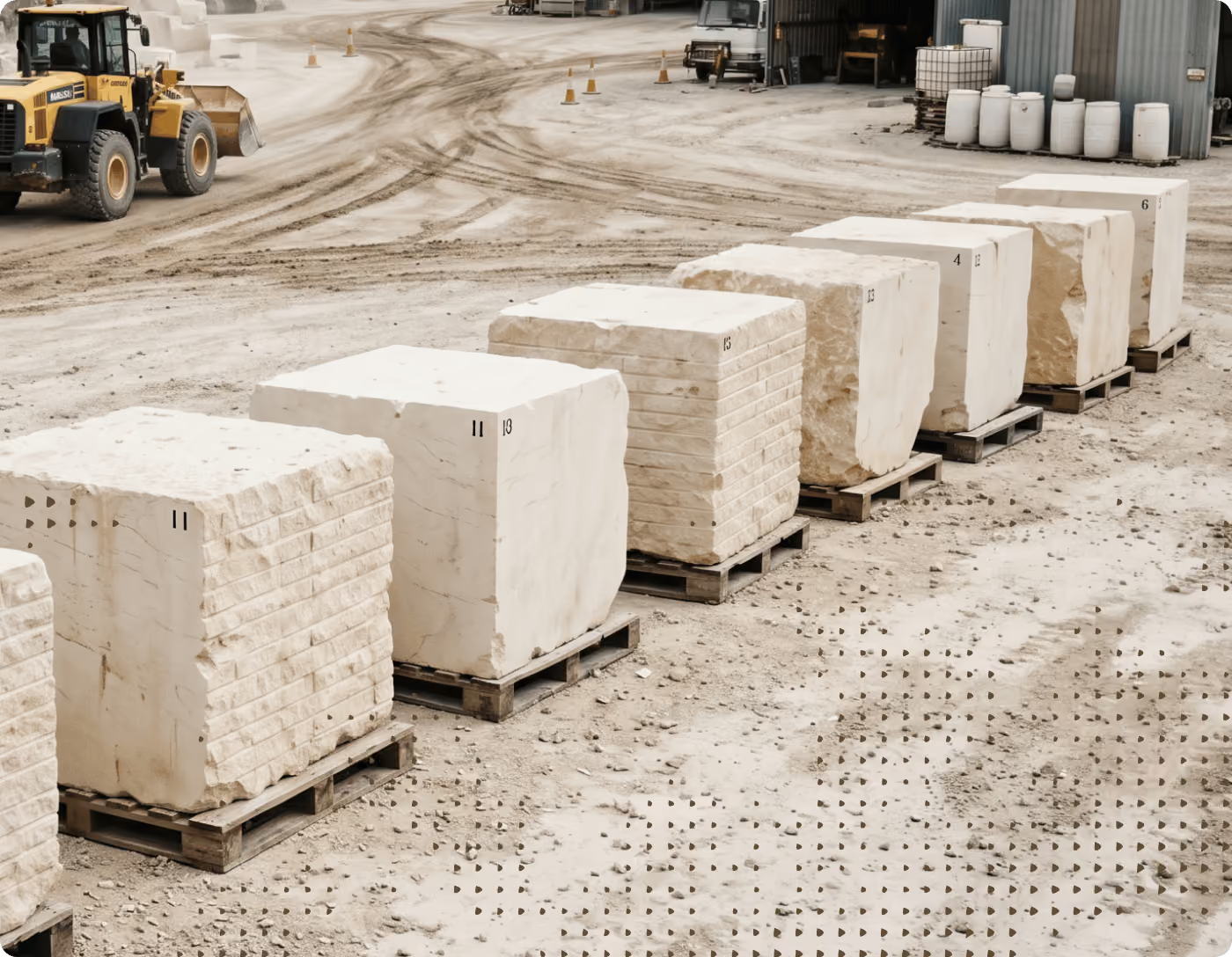

The best limestone supplier in India is not the cheapest quote. It is the supplier that controls quality from mine to dispatch. This guide covers the two-stage quality control industrial buyers should look for, source control and in-house beneficiation, plus the chemistry, sizing, and documentation checks that follow.
Most searches for a limestone supplier in India return the same thing: traders, marketplace listings, and suppliers whose material all looks identical on paper. Every quotation says "high quality." Every sample clears the first test. The real differences only show up months later, when batch quality starts to drift, and the plant pays for it.
The best limestone supplier in India for industrial buyers is one that controls quality from the source. Suppliers that own their mines and run in-house beneficiation can deliver consistent CaCO3 purity, controlled impurities, and application-specific sizing, whether the limestone is for glass, solar glass, FGD, poultry feed, cement, or other industrial uses.
That is the standard this guide is built around. It covers the two levels of quality control that separate serious suppliers from traders, the material checks that follow, and how limestone requirements change across industries.
Why "best limestone supplier" depends on the application
There is no universal best supplier. Only the supplier can consistently meet the specification your process depends on.
A glass or solar glass manufacturer needs tightly controlled iron content, because even small variations in Fe2O3 affect clarity and light transmittance. A power plant running FGD needs CaCO3 with sufficient content and reactivity to capture sulfur efficiently. A poultry or animal feed producer needs digestible calcium availability, not just a high purity number. A cement plant may want limestone that improves LSF in the raw mix.
Same rock. Completely different buying decisions.
So the real question is not "Who is the best limestone supplier in India?" It is "Which supplier can hold our specification, dispatch after dispatch?" The answer to that question starts before the material is ever tested. It starts at the source.
The five checks, at a glance
Evaluating a limestone supplier comes down to five questions, and they build in a deliberate order: from where the material comes from, to how it is processed, to what it actually contains, to whether the supplier can prove it and keep delivering it. The first two matter most, because a supplier who controls the source and the processing can stand behind everything below them.
Let’s look at them one by one now.
Check 1: Does the supplier control its source?
Most limestone quality problems do not start in the lab. They start at the quarry.
A supplier that owns and operates its own mine can control which limestone zones are extracted, how the raw material is selected, and how much natural variation enters the supply chain in the first place. A supplier buying from third-party quarries inherits whatever those deposits produce. When the source changes, the material changes with it.
This is why source control is the first thing industrial buyers should check.
A limestone supplier that owns its mine can control quality from the extraction stage itself. It can select which zones are mined, manage raw material consistency, and reduce dependence on third-party quarry material. For industrial buyers, source control is the first sign of a reliable supplier.
Single-source material also has a practical advantage: it is far easier to keep consistent than material blended from multiple origins. When the chemistry of the deposit is known and stable, the supplier can predict what the next thousand tonnes will look like. When the material comes from wherever the market offers that month, nobody can.
A test report tells you what one batch looked like. Source control tells you why the next batch will look the same.
Check 2: Does the supplier control its processing?
Owning the source is the first stage. Processing it properly is the second.
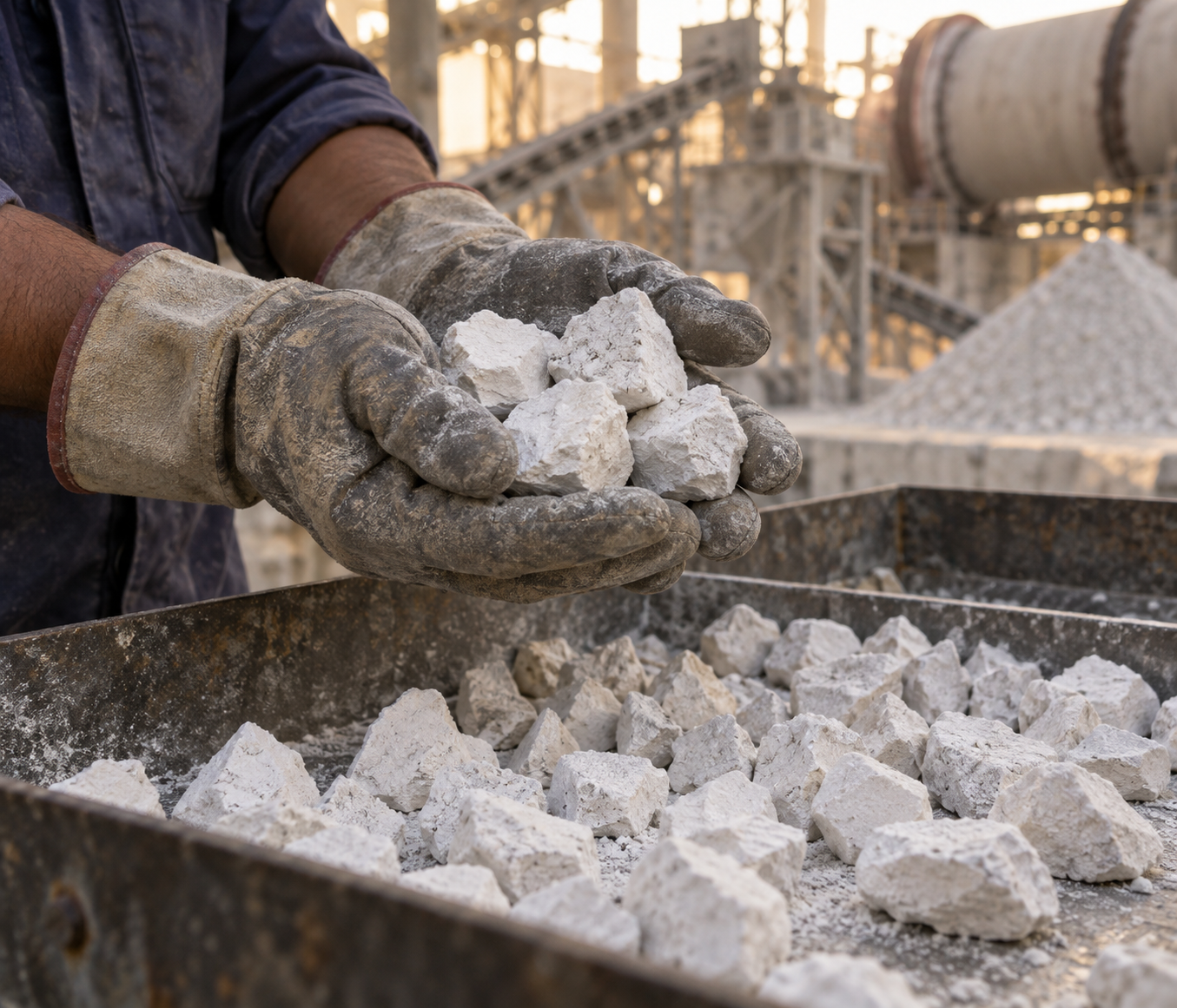
Limestone rarely matches an industrial specification straight out of the ground. It has to be beneficiated before it becomes a defined product. That means crushing, screening, sorting, and blending, with unsuitable material removed. Depending on the application, this can include optical sorting to remove off-grade material and magnetic separation to bring down iron content.
A supplier with in-house beneficiation controls the final specification of the supplied product, not just the raw rock. A supplier without it can only pass along what the deposit gives them.
Together, these two stages form a simple credibility test. Ask any supplier two questions: Where does your limestone come from? And who processes it?
A supplier that controls both the mine and the processing can take responsibility for the specification end-to-end. A supplier that controls neither is essentially a middleman, and every quality promise they make depends on someone else keeping it.
Check 3: Chemistry that matches your application
Once source and processing controls are established, the material itself must be verified. Chemistry comes first.
"High-quality limestone" is not a specification. Buyers should ask for the actual numbers relevant to their process, and each parameter should connect to a real outcome in the plant:
Final specifications should always be confirmed by the buyer's technical or quality team.
The point is not to demand every parameter from every supplier. It is to know which parameters drive your process, and to insist the supplier can state and hold them. A cement buyer chasing LSF improvement is asking a different question than a solar glass buyer chasing low iron. The right supplier answers both in specification language, not marketing language.
Check 4: Application-specific sizing
Chemistry is only half of the material. The physical form matters just as much.
The same limestone may need to be a fine powder for fillers, a defined grit for poultry feed, or a controlled fraction for FGD dosing. Particle size affects how the material reacts, blends, flows, and dissolves. In feed applications, it even affects how calcium is released and absorbed.
This is where beneficiation shows its value again. Sizing is a processing outcome. A supplier with in-house milling and screening can maintain a consistent particle size distribution across repeated dispatches. A supplier selling generic crushed limestone cannot.
Buyers should request the size specification in writing and ask how it is verified before dispatch. Consistent sizing across orders matters as much as the size itself.
Check 5: Documentation, certifications, and supply reliability
The last check is whether the supplier can prove everything above, and keep delivering it.
Procurement and quality teams should be able to review, before approval:
- Product specifications and test reports across batches, not one approved sample
- A Certificate of Analysis with each product, so every lot is verifiable
- ISO certifications for quality, environment, safety, and energy, which show the supplier runs documented systems rather than informal checks
- Dispatch capability for recurring monthly volumes and annual supply contracts
Location plays a supporting role. For buyers in North, West, and Central India, suppliers connected to Rajasthan's limestone belt often make logistical sense, with shorter freight distances and more predictable lead times. But geography should support the decision, never replace it. An ISO certified limestone supplier in India with strong documentation and an average location beats a nearby supplier with neither.
If a supplier cannot show specifications, batch reports, and certifications on request, treat that as the answer.
How limestone requirements change by industry
Different industries are effectively buying different products from the same rock. This table is a starting point for supplier conversations:
Final specifications should always be confirmed by the buyer's technical or quality team.
The right supplier should be able to explain which of their grades fits your row of this table, and why. If every customer gets the same material regardless of application, the supplier is selling tonnage, not a product.
The buyer's checklist
Before shortlisting a limestone supplier in India, run the conversation through this table:
A supplier that gives strong answers across this table is worth a technical conversation. A supplier that gives weak answers on the first two rows will struggle with everything below them, because without source and processing control, consistency is a promise they cannot actually keep.
Where Dr. Lime fits for industrial limestone buyers in India
Dr. Lime is built around the two-stage model described in this article.
Dr. Lime controls quality from the extraction stage. Its material comes from a controlled, single-source deposit with up to 96% calcium carbonate content, where high-purity reserves are selectively extracted and pre-classified at the mine site itself. That means consistency is managed before the limestone ever enters processing, not corrected afterward.
The second stage is in-house beneficiation. The material moves through optical sorting to remove off-grade fractions, precision milling and screening to achieve defined particle-size windows, and multi-stage magnetic separation to bring iron down to the low levels required by glass and solar glass applications. Every batch is tested for chemistry and particle characteristics before dispatch, and each product ships with a Certificate of Analysis and MSDS.
The result is a range of application-specific engineered limestone products rather than one generic grade, including low-iron limestone for solar glass, limestone grit for poultry feed, and limestone for LSF improvement in cement. The company operates under ISO 9001, ISO 14001, ISO 45001, and ISO 50001 systems, and is connected to Rajasthan's limestone belt for reliable dispatch across India.
For buyers evaluating the best limestone supplier in India, Dr. Lime is built around the factors that matter most: source control, in-house processing, application-fit chemistry, and reliable supply.
Final takeaway
The best limestone supplier in India is not the one with the cheapest quote or the closest pin on the map. It is the supplier that controls quality from mine to dispatch: selecting the raw material at the source, processing it to a defined specification, proving it with documentation, and holding it across every repeat order.
If your plant needs high-purity limestone for glass, solar glass, FGD, poultry or animal feed, cement, chemical, filler, or agricultural applications, Dr. Lime can help you evaluate the right grade, sizing, and supply model for your requirement.
FAQs
Who is the best limestone supplier in India?
The best limestone supplier in India depends on the buyer's industry, specification, volume, and documentation needs. Industrial buyers should evaluate whether the supplier controls its own source and processing, can prove purity and impurity levels with test data, offers application-specific sizing, and can support reliable long-term supply.
Why does mine ownership matter when choosing a limestone supplier?
A supplier that owns and operates its own mine can control limestone quality from the extraction stage. It can select which zones are mined and manage raw material consistency at the source. Suppliers dependent on third-party quarries inherit whatever variation those deposits exhibit, making batch-to-batch consistency much harder to guarantee.
What is limestone beneficiation?
Limestone beneficiation is the processing of mined limestone to meet a defined specification. It typically includes crushing, screening, sorting, and blending, and may also include optical sorting and magnetic separation to remove off-grade material and reduce iron content. A supplier with in-house beneficiation controls the final supplied product, not just the raw rock.
What should industrial buyers check before choosing a limestone supplier in India?
Buyers should check five things: whether the supplier controls its own source, whether it processes the material in-house, whether the chemistry matches the application, whether sizing is application-specific and consistent, and whether documentation, certifications, and dispatch capability support long-term supply.
Why is CaCO3 important when choosing a limestone supplier?
CaCO3 indicates calcium carbonate purity, which affects performance across most industrial applications. But CaCO3 alone is not enough. Buyers should also check the impurities that matter for their process, such as Fe2O3 for glass, MgO for feed and cement, and SiO2 for glass and steel applications.
What limestone specifications matter for glass and solar glass manufacturing?
Glass and solar glass manufacturers need high-purity limestone with tightly controlled iron and silica. Fe2O3 is the critical parameter because even small amounts of iron affect glass colour, clarity, and light transmittance, which can disqualify material from solar glass specifications. Batch consistency is equally important for continuous furnace operation.
Why is digestible calcium availability important in limestone for poultry and animal feed?
Feed limestone is not judged on purity alone. The calcium must be in a form the animal can absorb, which depends on particle size, dissolution rate, and low levels of interfering minerals such as magnesium. That is why feed buyers evaluate digestible calcium availability, low MgO, and suitable grit size together, rather than just the CaCO3 percentage.
Is Rajasthan a good source for limestone in India?
Yes, Rajasthan is one of India's important limestone regions, and its proximity helps buyers in North, West, and Central India reduce freight cost and lead time. But buyers should not choose a supplier on geography alone. Source control, processing capability, chemistry, documentation, and dispatch reliability still decide whether the supplier is the right fit.
Does Dr. Lime supply limestone for industrial applications?
Yes. Dr. Lime supplies engineered limestone products for industrial applications including glass, solar glass, FGD, poultry and animal feed, cement, chemicals, fillers, and agriculture. Dr. Lime controls quality at two levels: at the mine, where the raw material is selectively extracted, and through in-house beneficiation, where it is processed to application-specific requirements.