

Calcium for Poultry: Grit vs Powder for Layer Hens


Laying hens form most of the eggshell at night, when they are not eating, so they need slow-release coarse calcium grit as well as fine calcium powder. Breeder guidance raises the coarse share from half at pre-lay to three quarters late in lay. Before buying, check calcium, magnesium, size bands, dust and lot test results.
A layer farm can buy good feed, keep its birds healthy and still collect too many thin-shelled eggs. Often the calcium is in the feed. It is simply arriving at the wrong time.
When farmers talk about calcium for poultry, they usually mean how much. For laying hens, particle size matters just as much.
Laying hens need calcium in two forms. Fine powder dissolves fast and covers the day. Coarse grit stays in the gizzard and keeps releasing calcium overnight, when most of the eggshell forms. Commercial layer diets use both, and the coarse share should rise as the flock ages.
This guide covers why timing matters, what grit and powder each do, the sizes and ratios breeders use, and what to check before you buy.
Why layers need so much calcium, and when
A laying hen needs a lot of calcium, and she needs it at night.
Hy-Line's guide for its Brown layer puts her daily need at about 3.8 g from first egg. That rises to about 4.7 g after 77 weeks.
The shell takes about 20 hours to form, and most of that work happens in the dark, as a 2022 meta-analysis in Poultry Science notes. The hen is not eating then. If there is no calcium left in her gut, she draws it from her bones instead.
So the question is not only how much calcium the feed contains. It is whether that calcium is still available at midnight.
In India, layer feed must also meet IS 1374, the Bureau of Indian Standards chicken feed standard, which sets minimum calcium levels by feed type and phase. Its 2024 revision updated those levels and added a pre-lay feed, so formulators should work from the current edition.
Grit and powder do different jobs
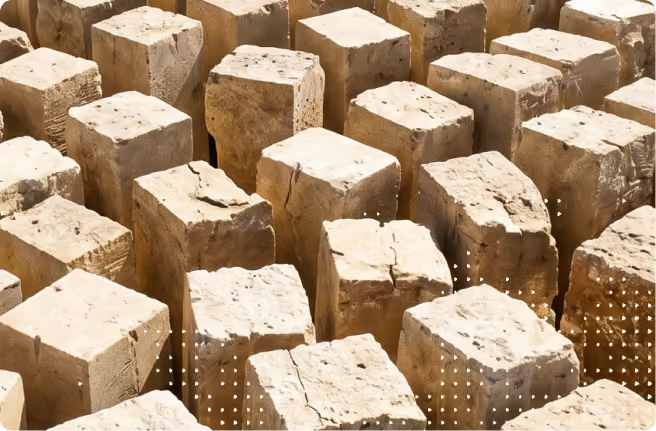
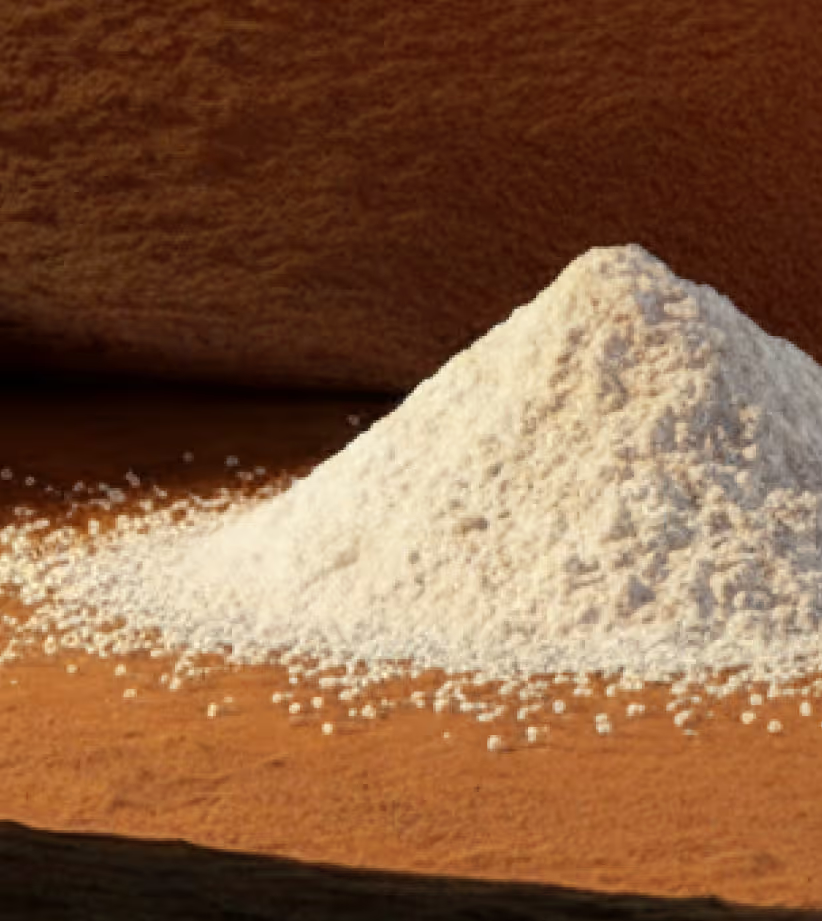
Calcium grit is coarse calcium carbonate, usually 2–4 mm, that the hen holds in her gizzard. Calcium powder is the same mineral ground fine, which dissolves quickly once eaten.
Calcium grit is not the same as insoluble grit. Flint or granite grit helps the gizzard grind feed and never dissolves. Calcium grit dissolves slowly and is a nutrient.
The 2022 meta-analysis pooled 71 experiments from 58 papers. It found that coarse particles stay longer in the gizzard and keep releasing soluble calcium through the night, so hens draw less on their bones. Moving from 0.15 mm to 1.5 mm particles raised shell thickness by 1.1% and shell breaking strength by 3%, with no change in egg production.
Small as those gains look, shell strength is what keeps eggs from cracking between the cage and the market.
Fine powder still has a job. It mixes evenly in mash and pellets, dissolves fast, and supplies calcium during the day.
What particle size and ratio to use
Breeder calcium guidance changes through the laying cycle. The table below shows one example, from Hy-Line's management guide for its Brown commercial layer. Other breeds, and your nutritionist, may set different targets.
| Stage | Fine calcium (0–2 mm) | Coarse calcium (2–4 mm) |
|---|---|---|
| Starter, grower, developer | 100% | None |
| Pre-lay | 50% | 50% |
| 17–37 weeks | 40% | 60% |
| 38–48 weeks | 35% | 65% |
| 49–62 weeks | 30% | 70% |
| 63 weeks onwards | 25% | 75% |
Source: Hy-Line Brown Commercial Layers Management Guide (2018). Final specifications should always be confirmed by the buyer's technical or quality team.
The coarse share rises because older hens lay bigger eggs and need more calcium each day. The guide also cautions that the right size depends on how soluble the calcium source is, so a less soluble source may need a different ratio.
Chicks, growers and broilers are different
Coarse grit is a layer tool. In the same breeder guidance, chick, grower and developer feeds use fine calcium only.
Broilers do not lay, so their calcium goes into bone growth. For broiler, starter and premix feeds, what matters is a fine, consistent powder that blends evenly and does not separate in the mixer.
What to check when buying calcium for poultry
Two bags can both say "feed grade calcium" and perform very differently in the flock. Read the table below as a checklist for any calcium grit or powder offer.
| Check | Why it matters |
|---|---|
| Calcium content | Pure calcium carbonate is 40% calcium. A figure well below that means more inert material in every bag. |
| Magnesium | In dolomitic stone, magnesium replaces part of the calcium. NRC (1994), as cited by Pelicia et al. (2011), puts calcium availability near 90% for calcitic stone and 50–75% for dolomitic. |
| Iron, acid insolubles, moisture | None of these supply calcium. Moisture also causes caking in bins and feeders. |
| Size bands and dust | Grit must hold its size. Fines in a grit bag behave like powder and quietly undo the ratio. |
| Fluorine, lead, arsenic | Feed standards cap these in finished feed, and the calcium source is a large share of a layer diet. Ask for lot test results. |
| Consistency and documents | Ask for a certificate of analysis for every lot, not one good sample. |
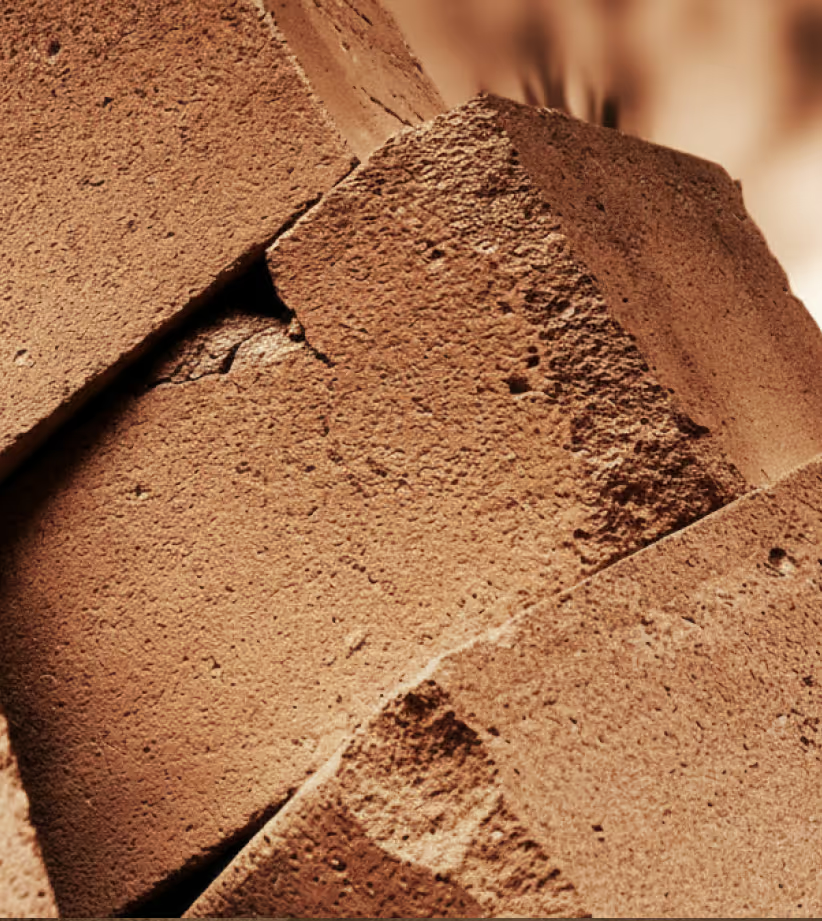
Hy-Line's guide adds that darker stone is usually older, carries more magnesium and is less soluble. Colour is a clue, not a test. The lab report decides.
For the impurities buyers check in calcium carbonate generally, see our guide to high-purity specifications and how to verify them.
Common mistakes
Most calcium problems come from a few habits.
| Mistake | Why it costs eggs |
|---|---|
| Powder only for layers | Calcium runs out before the night's shell-building is done |
| One ratio for the whole cycle | Older hens need a larger coarse share |
| Dusty grit | Fines dissolve early and behave like powder |
| "Lime powder" that is hydrated lime | Hydrated lime is caustic calcium hydroxide, not feed calcium |
| Liquid tonics instead of feed calcium | Tonics supplement; they cannot supply around 4 g of calcium a day |
| Extra calcium without the nutritionist | Calcium and phosphorus have to stay in balance |
Where Dr. Lime fits
For layer farms and feed mills evaluating calcium sources, Dr. Lime is built around the factors this guide covers: particle size, chemistry and lot-to-lot consistency.
CaSure Grit is calcium grit in segregated size bands from 0.5 to 4 mm, with a controlled top-cut, for layer and breeder flocks. CaSure Powder passes 100 mesh with a narrow particle size distribution, for broiler, starter and premix feeds. Both are specified at Ca ≥ 38% and Mg ≤ 0.5%. For cattle, goat, swine and aqua compound feed, CaMoo38 passes 200 mesh.
The material comes from a single-source deposit and is processed at Dr. Lime's ISO 9001:2015-certified plant in Nagaur, Rajasthan, which has its own laboratory. Processing covers milling, screening, magnetic separation and classification. More on feed applications is on our poultry and animal feed page.
If you are setting a grit-to-powder ratio or qualifying a new calcium source, the Dr. Lime team can share specifications and arrange samples.
Feed the night, not just the day
A hen builds most of her shell in the dark, when she is not eating. Fine calcium covers the day. Coarse grit carries her through the night.
Get the size and the ratio right, check the chemistry behind them, and the calcium you pay for ends up in the shell.
FAQs
How much calcium does a laying hen need per day?
A commercial laying hen needs roughly 4 g of calcium a day, and the need rises with age. Hy-Line's guide for its Brown layer sets about 3.8 g per bird per day from first egg, rising to about 4.7 g after 77 weeks. Your breed's management guide and nutritionist set the exact figure.
Should layer hens get calcium grit or powder?
Laying hens do best with both. Fine calcium powder dissolves quickly and supplies calcium during the day. Coarse calcium grit, usually 2–4 mm, stays in the gizzard and keeps releasing calcium overnight, when most of the eggshell is formed. Breeder guidance uses mostly coarse calcium once lay begins.
What size of calcium grit is best for layers?
Breeder guidance commonly defines coarse calcium for layers as 2–4 mm and fine calcium as 0–2 mm. Coarse particles stay longer in the gizzard, which gives a slower, longer release of calcium. The best size also depends on how soluble the calcium source is, so check it with your nutritionist.
What ratio of coarse to fine calcium should layers get?
The coarse share usually rises through the laying cycle. Hy-Line's guide for its Brown layer moves from 50% coarse at pre-lay to 60% at 17–37 weeks and 75% from 63 weeks onwards. Other breeds and nutritionists may use different targets, so treat this as an example.
Is shell grit the same as calcium grit?
Both supply calcium carbonate. Shell grit is crushed oyster or other marine shells, while calcium grit is usually ground from calcitic stone. Either works as a coarse calcium source for layers if its calcium content, particle size and contaminant levels meet the specification.
Can "lime powder" or hydrated lime be used as calcium in poultry feed?
No. Hydrated lime is calcium hydroxide, which is caustic and is used on farms for shed sanitation, not feed. Poultry feed calcium should be calcium carbonate. Because calcium carbonate powder is sometimes sold as "lime powder", buyers should check that the label says CaCO3.
Do broilers need calcium grit?
Broilers do not lay eggs, so they do not need coarse calcium grit for shell formation. Their calcium supports bone growth and is usually supplied as fine calcium carbonate powder blended evenly into the feed. Even blending and consistent fineness matter more for broilers than particle size.
Does Dr. Lime supply calcium grit for poultry?
Yes. Dr. Lime supplies CaSure Grit, a calcium grit in size bands from 0.5 to 4 mm for layer and breeder flocks, and CaSure Powder, a fine calcium carbonate for broiler, starter and premix feeds. Specifications and samples are available from the Dr. Lime team.