

Layer Feed Formulation: How Much Calcium, and From What Source
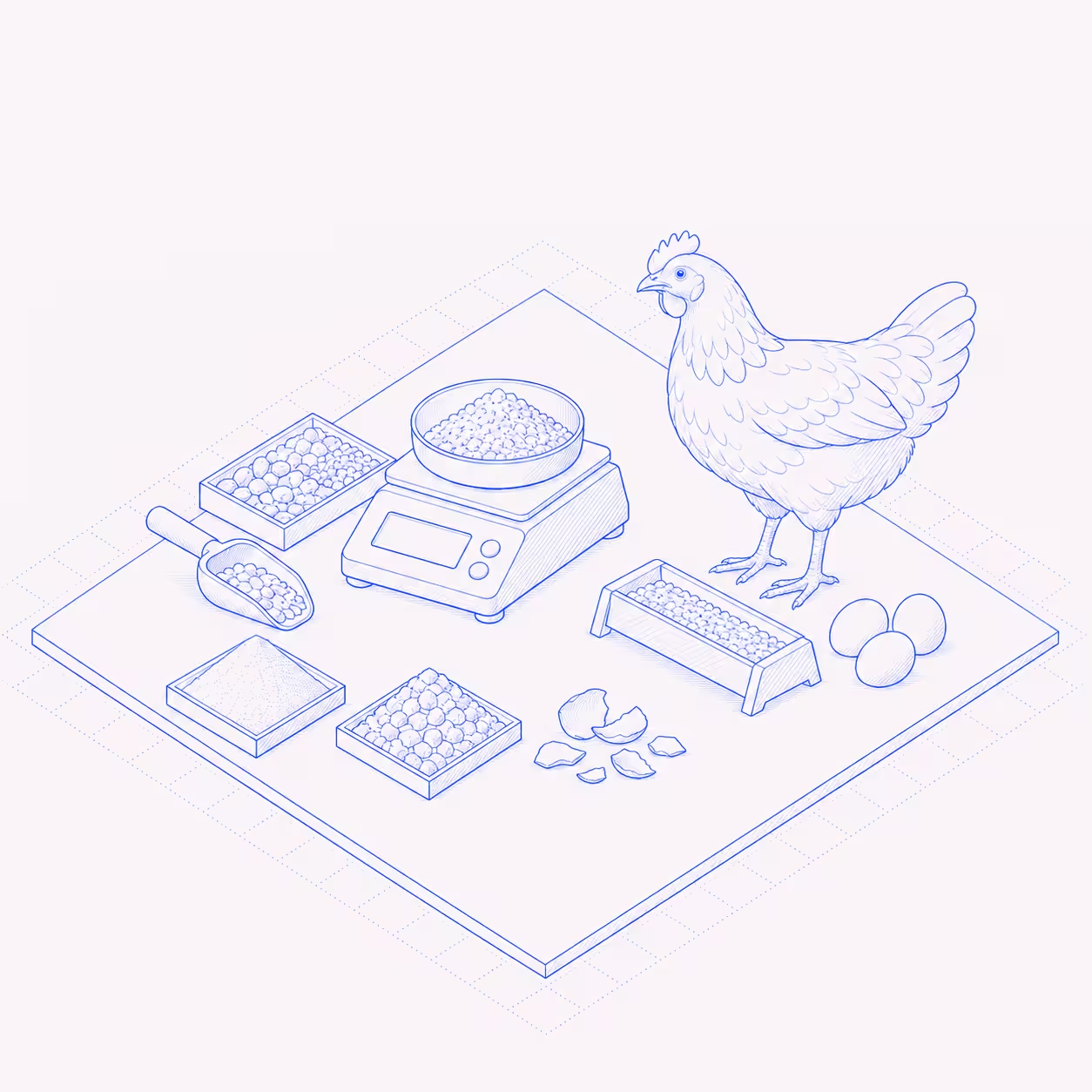

Layer feed needs more calcium than any other poultry feed, roughly 3.5–4.5% depending on hen age and feed intake. At 4% calcium, a tonne of feed needs about 105 kg of calcium carbonate at 38% Ca, or 118 kg at 34%. So check the calcium content of the source before you set the formula, not after.
A broiler feed and a layer feed can share most of their ingredients. Maize, soybean meal, a premix. The difference shows up in one line of the formula.
Layer feed carries about four times the calcium of broiler feed. That one line takes about a tenth of every tonne.
Layer feed formulation balances energy, protein and minerals against what a hen eats each day. Calcium is the largest mineral: commercial layer feed typically carries roughly 3.5–4.5% calcium, which takes about 100 kg of calcium carbonate per tonne. The exact figure depends on hen age, feed intake and the calcium source.
This note covers the ingredients, how much calcium layer feed needs, how to calculate calcium carbonate per tonne, and how the source changes the formula. Particle size and the grit-to-powder ratio are covered in calcium grit vs powder for layer hens.
What goes into a layer feed formulation?
A layer feed formulation is built from energy grains, protein meals, a calcium source, a phosphorus source and a premix. IS 1374, the Bureau of Indian Standards chicken feed standard, lists the common Indian ingredients. They include yellow maize, rice and wheat bran, soyabean and groundnut oilcake, dicalcium phosphate and limestone.
Read the table below as a map of what each group does in the formula.
| Ingredient group | Common Indian choices | Job in the formula |
|---|---|---|
| Energy | Yellow maize, other grains | Main energy source |
| Protein | Soyabean meal, groundnut oilcake | Protein and amino acids |
| Bran | Wheat bran, rice bran | Fibre and bulk |
| Calcium | Calcium carbonate, as grit and powder | Eggshell |
| Phosphorus | Dicalcium phosphate | Bone, and balance with calcium |
| Premix | Vitamins, trace minerals, amino acids | Fills the gaps |
Grains and oilmeals carry little calcium. Almost all of it comes from the calcium source, which is why that line deserves its own calculation.
How much calcium should layer feed contain?
Layer feed should contain enough calcium to meet the hen's daily need at the amount she actually eats. The percentage is the daily need divided by daily feed intake.
So a hen that needs 4.4 g of calcium a day and eats 110 g of feed needs a feed with 4.0% calcium. If she eats 100 g, the same need takes 4.4%.
In India, the 2007 edition of IS 1374 sets minimum calcium by layer phase. Phase I (21–45 weeks) needs 3.0%, and Phase II (46–72 weeks) needs 3.5%. It also advises top-dressing shell grit or limestone at about 4–5 g per bird per day during lay. The 2024 revision updated these requirements and added a pre-lay feed, so formulators should work from the current edition.
Breeder guidance usually runs higher than the standard's minimum. The table below shows one example, from Hy-Line's guide for its Brown commercial layer, at typical feed intake.
| Hen age | Typical feed intake | Calcium | Available phosphorus |
|---|---|---|---|
| 17–37 weeks | 98 g/day | 4.29% | 0.50% |
| 38–48 weeks | 110 g/day | 4.00% | 0.40% |
| 49–62 weeks | 110 g/day | 4.18% | 0.36% |
| 63–76 weeks | 109 g/day | 4.40% | 0.35% |
Final specifications should always be confirmed by the buyer's technical or quality team.
How do you calculate calcium carbonate per tonne?
Calculate calcium carbonate per tonne by dividing the calcium the feed needs by the calcium content of the source.
kg of calcium source per tonne = target calcium % × 1,000 ÷ calcium % of the source
Pure calcium carbonate is 40% calcium. Real feed-grade material is usually a little lower, and that gap changes the formula.
The table below assumes a 4.0% calcium feed, which is 40 kg of calcium per tonne, and ignores the small amount from other ingredients.
| Calcium in the source | Calcium source per tonne | Change from pure |
|---|---|---|
| 40% (pure calcium carbonate) | 100 kg | None |
| 38% | 105 kg | +5 kg |
| 36% | 111 kg | +11 kg |
| 34% | 118 kg | +18 kg |
Every extra kilogram of calcium source takes the place of a kilogram of grain or meal. At 34% calcium, that is 18 kg per tonne of feed the hen cannot use for energy or protein.
A mill making 100 tonnes a day would handle about 1.3 tonnes more stone daily at 34% than at 38%. This is illustrative arithmetic, not a recipe.
Why does phosphorus fall as calcium rises?
Phosphorus falls as calcium rises because older hens need more calcium for bigger eggs but less phosphorus. In the Hy-Line example above, calcium climbs from 4.00% to 4.40% after 38 weeks, while available phosphorus drops from 0.40% to 0.35%.
That is why layer feed comes in phases. IS 1374 has two layer phases, Phase I and Phase II. Breeder guides often use more, with each step moving calcium and phosphorus in opposite directions.
Calcium and phosphorus have to be set together. Adding calcium without your nutritionist's check can upset that balance.
Does the calcium source change the formula?
The calcium source changes the formula in three ways: its calcium content, how available that calcium is, and how fast it dissolves.
Calcium content sets the kilograms, as the table above shows. A source that varies from lot to lot makes the formula wrong from lot to lot.
Availability depends on the stone. Pelicia et al. (2011), citing the US National Research Council (1994), put calcium availability near 90% for calcitic stone. For dolomitic stone, where magnesium replaces part of the calcium, it is 50–75%.
That is the real case for low magnesium in feed calcium. It is about calcium availability, not magnesium itself. A 2016 study in hens found that magnesium up to 4 g/kg of feed, given with coarse limestone, improved shell percentage.
Solubility matters too. Hy-Line's guide notes that darker, older stone usually carries more magnesium and dissolves more slowly. It advises adjusting dietary calcium to the solubility of the source.
For the line-by-line reading of a supplier's test report, see how to read a certificate of analysis.
Where Dr. Lime fits
For feed mills and layer farms setting the calcium line, Dr. Lime is built around the factors this note covers: calcium content, magnesium and lot-to-lot consistency.
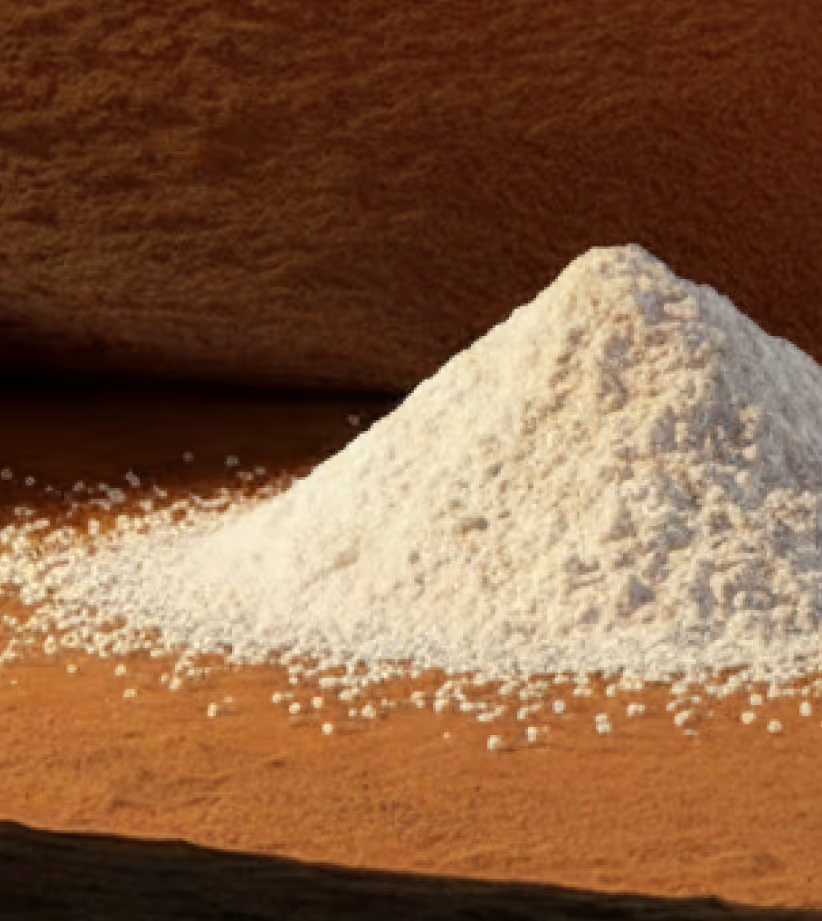
CaSure Grit is calcium carbonate in segregated size bands from 0.5 to 4 mm, with a controlled top-cut, for layer and breeder flocks. CaSure Powder passes 100 mesh, for broiler, starter and grower feeds. Both are specified at Ca ≥ 38% and Mg ≤ 0.5%, which puts them on the 105 kg row of the table above.
The material comes from a single-source deposit in Nagaur, Rajasthan. More on feed applications is on the poultry and animal feed page.
If you are setting the calcium line for a new formula, the Dr. Lime team can share specifications and certificates of analysis on request.
Count the calcium, not the kilos
A formula specifies kilograms of limestone. The hen needs grams of calcium.
The gap between the two is the calcium content of the source. Check it first, set the formula from it, and the calcium in the bag ends up in the shell.
FAQs
How much calcium should layer feed contain?
Layer feed typically contains roughly 3.5–4.5% calcium, depending on hen age and feed intake. IS 1374 (2007) sets minimums of 3.0% for Layer Phase I and 3.5% for Phase II, while breeder guides such as Hy-Line's often recommend 4.0–4.4%. The right level is the hen's daily calcium need divided by her daily feed intake.
How much calcium carbonate goes into a tonne of layer feed?
For a layer feed at 4.0% calcium, a tonne needs about 100 kg of pure calcium carbonate, 105 kg at 38% calcium, or 118 kg at 34%. The formula is target calcium percentage times 1,000, divided by the calcium percentage of the source. Lower-calcium sources take more space in every tonne.
What does IS 1374 require for layer feed?
The 2007 edition of IS 1374 sets a minimum of 3.0% calcium for Layer Phase I (21–45 weeks) and 3.5% for Phase II (46–72 weeks). It also sets at least 0.40% available phosphorus. It also advises top-dressing shell grit or limestone at about 4–5 g per bird per day. The 2024 revision updated these levels, so check the current edition.
What is the difference between Phase I and Phase II layer feed?
Phase I layer feed is for younger hens in early lay, and Phase II is for older hens. IS 1374 (2007) defines Phase I as 21–45 weeks and Phase II as 46–72 weeks, with more calcium in Phase II. Older hens lay larger eggs, so they need more calcium and usually less phosphorus.
Is low magnesium important in layer feed calcium?
Low magnesium matters mainly because dolomitic stone has less available calcium. Citing NRC (1994), Pelicia et al. put calcium availability near 90% for calcitic stone and 50–75% for dolomitic stone. Magnesium itself is not harmful at moderate levels; one study found up to 4 g/kg of feed improved shell percentage.
Can quicklime or hydrated lime be used in poultry feed?
No. Quicklime and hydrated lime are caustic forms of lime, used on farms for sanitation, not feed. Poultry feed calcium should be calcium carbonate, supplied as grit or powder. Because calcium carbonate is sometimes sold as "lime powder", buyers should check that the label and certificate say CaCO3.
Does Dr. Lime supply calcium for layer feed?
Yes. Dr. Lime supplies CaSure Grit, calcium carbonate in size bands from 0.5 to 4 mm for layer and breeder flocks, specified at Ca ≥ 38% and Mg ≤ 0.5%. CaSure Powder, passing 100 mesh, serves broiler, starter and grower feeds. Specifications and certificates of analysis are available on request.