



Lime for Water Treatment: Which Calcium Material Does Which Job
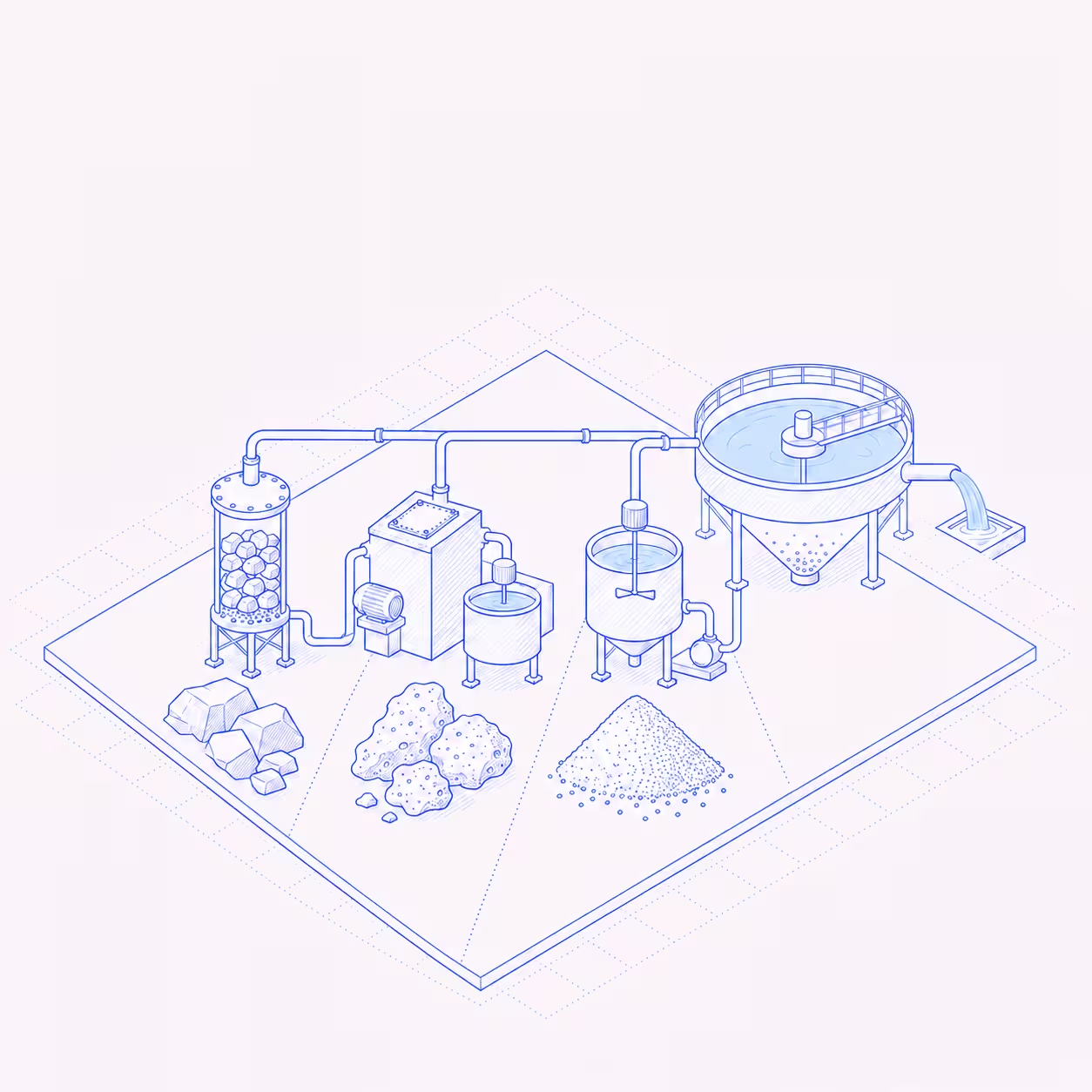

Calcium carbonate, quicklime and hydrated lime all go by "lime" in water treatment, but they stop at different pH levels. Calcite stops near pH 8, so it remineralises RO water and neutralises acid without overshooting. Lime reaches pH 12 and above, so it softens water and precipitates phosphate, at the cost of sludge.
An RO plant asks for calcite media. An effluent plant orders lime. A municipal tender says lime softening. A trader quotes "lime powder".
The word on the indent is the same. The chemistry in the tank is not.
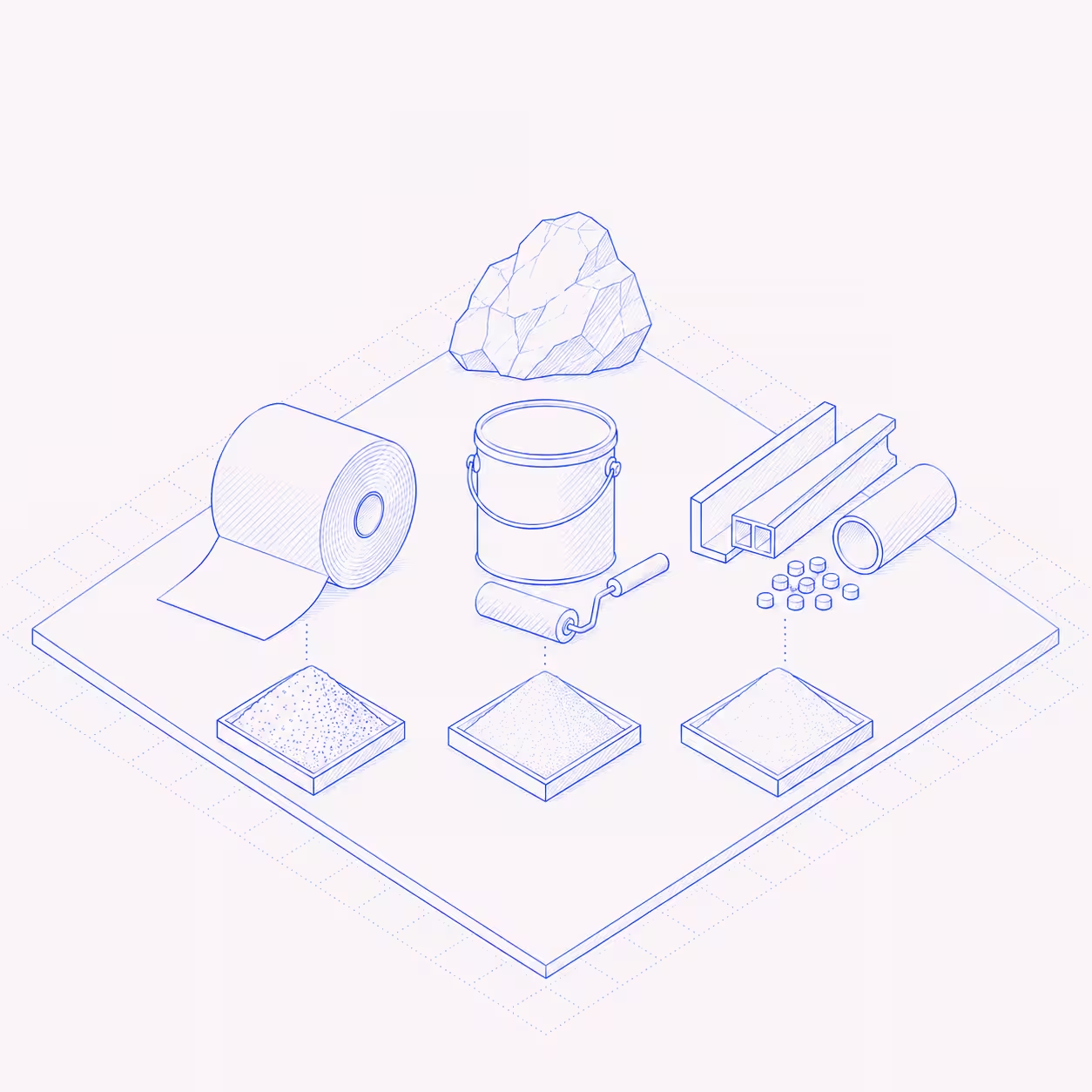
Lime for water treatment covers three calcium materials: calcium carbonate (calcite), quicklime (CaO) and hydrated lime, Ca(OH)2. Calcium carbonate remineralises RO water and neutralises acid without overshooting, but levels off near pH 8 in a calcite bed. Quicklime and hydrated lime reach pH 12 and above, so they soften water and precipitate phosphate and metals.
This note sets out which material does which job. For the everyday version, read what cleans your drinking water.
Lime for water treatment: three materials, not one
The three materials differ mainly in how high they can push pH.
Calcium carbonate, CaCO3, is the mineral itself, as granules or powder, and only mildly alkaline. Quicklime, calcium oxide, is made by heating limestone. Hydrated lime is quicklime with water added; its grades are covered in our hydrated lime explainer.
The National Lime Association gives the maximum pH of lime as 12.45 at 25 °C. Calcium carbonate slows and stops as water nears saturation, which in a calcite bed means close to pH 8. That difference decides the table below.
Which calcium material does which job?
Each water job suits one calcium material, usually decided by the pH it needs. Check the limits column first.
| Job | Material | How it works | Limits | Who uses it |
|---|---|---|---|---|
| Remineralising RO or desalinated water | Calcite with CO2; or hydrated lime with CO2 | CO2-acidified water dissolves calcite, adding calcium and alkalinity | Calcite stops near pH 8, dissolves slowly, needs CO2; lime slurry can add turbidity | RO and desalination plants |
| Raising pH and alkalinity of soft, acidic water | Calcite contactor; hydrated lime dosing | Raises pH, alkalinity and calcium together | Contactors suit influent below pH 7.2; lime is hard to control in poorly buffered water | Small systems; larger utilities |
| Neutralising acid effluent | Calcium carbonate for moderate acid; lime for strong acid and high loads | Carbonate reacts with acid, releasing CO2; lime reacts directly | Calcium carbonate is slow and can be coated by gypsum; lime can overshoot and is caustic | Metal finishing, pickling and chemical ETPs |
| Softening hard water | Hydrated lime, or quicklime slaked on site | Raises pH so calcium precipitates as calcium carbonate | Removes bicarbonate hardness only; makes sludge | Plants on hard groundwater; industrial make-up water |
| Phosphate or heavy-metal precipitation | Hydrated lime or quicklime; calcium carbonate for partial metal removal | High pH precipitates phosphate as hydroxylapatite and metals as hydroxides | Phosphate needs pH 10 or more; metal pH set by jar test; more sludge | Sewage plants; ETPs handling metals |
Sources: US EPA corrosion control and precipitation guidance. Final specifications should always be confirmed by the buyer's technical or quality team.
How does a calcite contactor remineralise RO water?
A calcite contactor, or calcite filter, remineralises RO water by passing CO2-acidified water through calcium carbonate granules: CaCO3 + CO2 + H2O → Ca2+ + 2HCO3-.
Hasson and Bendrihem (2006) note that this uses half the CO2 of the lime route. But calcite dissolves slowly and never quite finishes, so plants trim leftover CO2 with caustic soda or soda ash.
A Texas Water Development Board study reports the Alicante II plant in Spain. After 19 mg/l of CO2 and 11 minutes in the bed, the water changed as below.
| Parameter | RO permeate | After contactor |
|---|---|---|
| Calcium | 1.9 mg/l | 19 mg/l |
| Alkalinity, as CaCO3 | 4.2 mg/l | 68 mg/l |
| pH | 6.20 | 8.25 |
Calcium rose by 17.1 mg/l, and each mg/l of calcium takes 2.5 mg/l of calcium carbonate. So the bed gave up about 43 g of calcite per cubic metre, or 430 kg a day at 10 MLD.
IS 10500:2012 sets Indian drinking water pH at 6.5–8.5, with no relaxation. It caps calcium at 75 mg/l and total hardness at 200 mg/l, but sets no minimum, so the remineralisation target is a design choice.
Media matters too: the same study notes that impurities slow dissolution, add turbidity and can leach. Beds use grains of 1–3 mm. For calcite in other industries, see calcite powder uses.
How much calcium material neutralises an acid effluent?
Neutralisation runs on stoichiometry: one molecule of sulphuric acid takes one of calcium carbonate, calcium hydroxide or calcium oxide. The table gives theoretical minimums for pure material.
| Material | kg per kg of sulphuric acid | kg per kg of hydrochloric acid |
|---|---|---|
| Calcium carbonate, CaCO3 | 1.02 | 1.37 |
| Hydrated lime, Ca(OH)2 | 0.76 | 1.02 |
| Quicklime, CaO | 0.57 | 0.77 |
Real plants use more: the National Lime Association's figure works out to 0.62 kg of CaO for each kg of sulphuric acid, about 8% above theory.
So an ETP neutralising 100 kg of sulphuric acid a day needs at least 102 kg of pure calcium carbonate, or about 107 kg at 95% CaCO3. The US EPA advises setting the working dose by jar test.
Sulphuric acid is calcium carbonate's weak spot. In a USGS study of acid mine drainage, limestone grains were armoured with gypsum and iron within 48 hours. Effluent pH fell from above 7 to below 4.
Its strength is control. Schedule VI of the Environment (Protection) Rules sets effluent pH at 5.5 to 9.0. Calcium carbonate slows as the acid runs out, so it rarely overshoots that band. Lime keeps working towards pH 12.45.
When does a plant need lime instead of calcium carbonate?
A plant needs quicklime or hydrated lime when the job depends on pH well above 9: softening, phosphate removal and most metal hydroxide precipitation.
In lime softening, Ca(OH)2 + Ca2+ + 2HCO3- → 2CaCO3 + 2H2O. TU Delft course notes show each mmol/l of hardness removed forms more than 2 mmol/l of calcium carbonate. Removing 100 mg/l of hardness, as CaCO3, leaves over 200 g of solids per cubic metre, over 2 tonnes a day at 10 MLD.
Calcium carbonate cannot soften at all, because it adds the hardness softening removes. For phosphate, the US EPA says lime must raise pH to at least 10, and may increase sludge volume by up to 50%.
Where Dr. Lime fits
For plants evaluating calcium materials for water treatment, Dr. Lime makes two calcium carbonate grades from a single-source deposit in Nagaur, Rajasthan.
| Grade | Job | Quality options | Size |
|---|---|---|---|
| Cal Hydro | Potable conditioning, calcite filtration | CaCO3 ≥ 97%, MgO ≤ 1%, Fe2O3 ≤ 0.05%, SiO2 ≤ 1% | 0.2–2 mm granules; 100–200 mesh; below 200 mesh |
| pH Optima | Effluent neutralisation, metal precipitation | CaCO3 ≥ 95%, CaO ≥ 52%, SiO2 ≤ 2%, NV ≥ 97% | 0–3 mm granules; 80–300 mesh; ultra-fine |
Final specifications should always be confirmed by the buyer's technical or quality team.
Particle size is measured by laser analysis, and Certificates of Analysis are available on request. Hydrated lime and quicklime are part of Dr. Lime's product roadmap.
Plants sizing a calcite bed or a neutralisation step can talk to the Dr. Lime team about samples and trials.
The pH decides the material
"Lime" on a tender is a family name. The job needs one member of the family.
Calcium carbonate levels off near pH 8, so it suits RO water and discharge limits. Lime goes past 12, so it softens water and drops out phosphate, and leaves sludge.
Ask what pH the job needs, and the material chooses itself.
FAQs
Which type of lime is used in water treatment?
Three calcium materials are used: calcium carbonate (calcite), quicklime (calcium oxide) and hydrated lime (calcium hydroxide). Calcium carbonate is used in calcite filters and for mild acid neutralisation because it levels off near pH 8 in a calcite bed. Quicklime and hydrated lime are used for lime softening, phosphate removal and strong acid neutralisation, because they can raise pH beyond 12.
What is the difference between a calcite filter and lime dosing?
A calcite filter passes water through a bed of calcium carbonate granules, which dissolve until the water nears saturation, close to pH 8. Lime dosing adds hydrated lime as powder or slurry, which reacts faster and can push pH much higher. Calcite filters cannot overdose and need little equipment, while lime dosing needs closer pH control and can add turbidity.
How much calcium carbonate is needed to neutralise sulphuric acid?
In theory, 1.02 kg of pure calcium carbonate neutralises 1 kg of sulphuric acid, from the molecular weights of CaCO3 and H2SO4. A material at 95% calcium carbonate needs about 1.07 kg. Plants usually dose more than theory, and the working dose should be set by jar test on the actual effluent.
Can calcium carbonate be used for water softening?
No. Calcium carbonate adds calcium and alkalinity to water, so it raises hardness rather than lowering it. Lime softening uses hydrated lime or quicklime to raise pH until calcium precipitates as calcium carbonate. That process removes bicarbonate hardness and produces a calcium carbonate sludge that has to be settled and handled.
What pH does a calcite contactor reach?
A calcite contactor usually brings treated water close to pH 8, because calcium carbonate stops dissolving as the water nears saturation. At the Alicante II desalination plant in Spain, RO permeate at pH 6.20 left the calcite bed at pH 8.25. A plant that needs a higher pH trims with caustic soda or soda ash.
Does Dr. Lime supply lime for water treatment?
Dr. Lime supplies two calcium carbonate grades for water treatment today: Cal Hydro for potable water conditioning and calcite filtration, and pH Optima for effluent neutralisation and metal precipitation. Hydrated lime and quicklime are part of Dr. Lime's product roadmap and are not supplied today. Plants planning future needs can contact the Dr. Lime team.